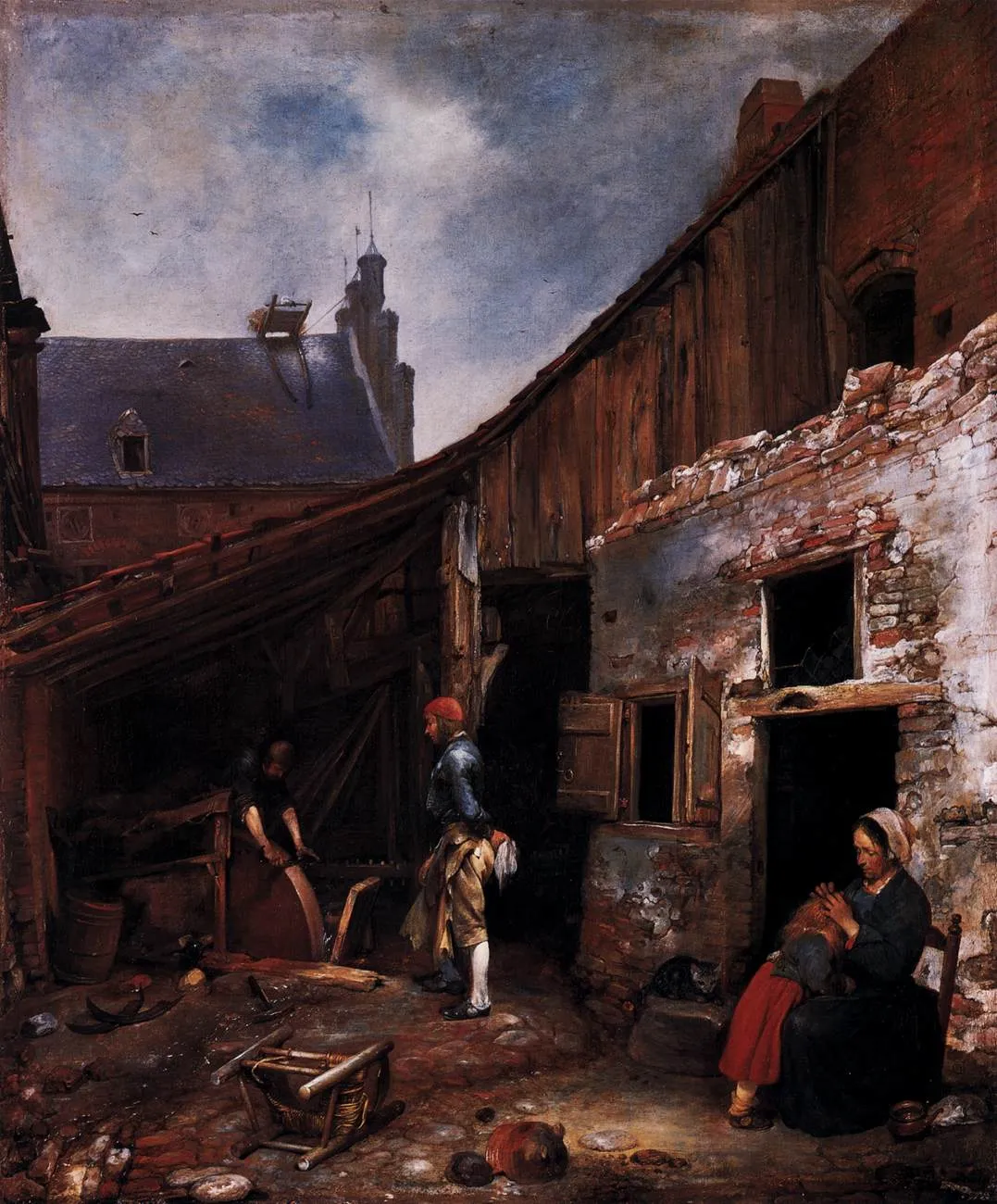
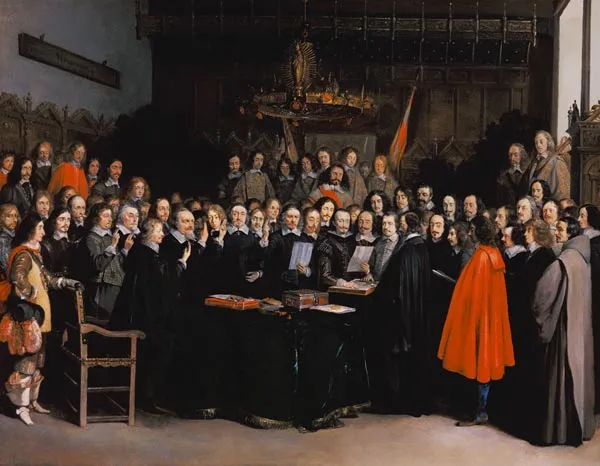
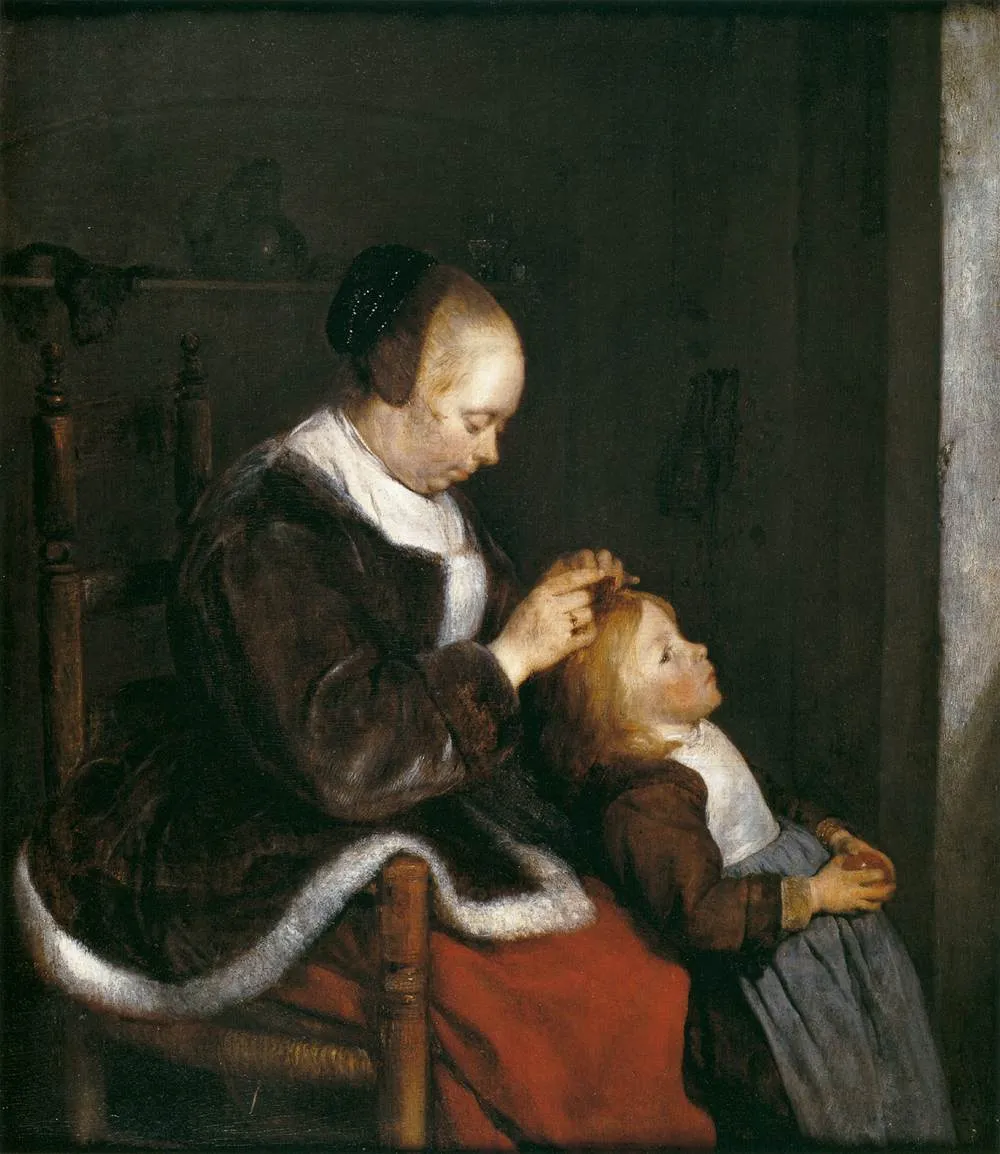
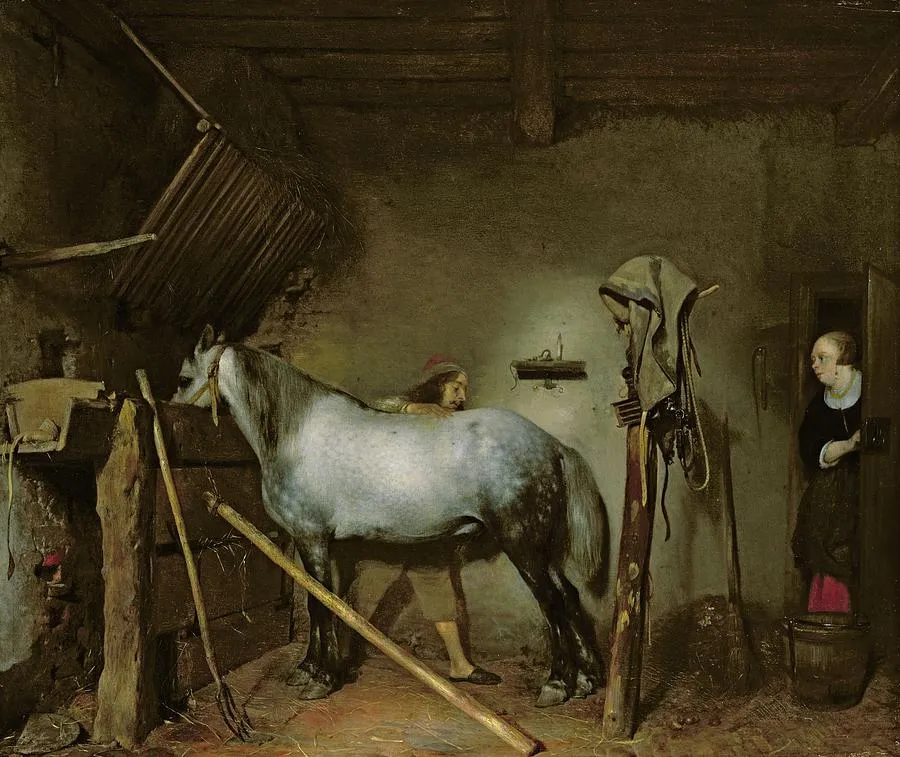
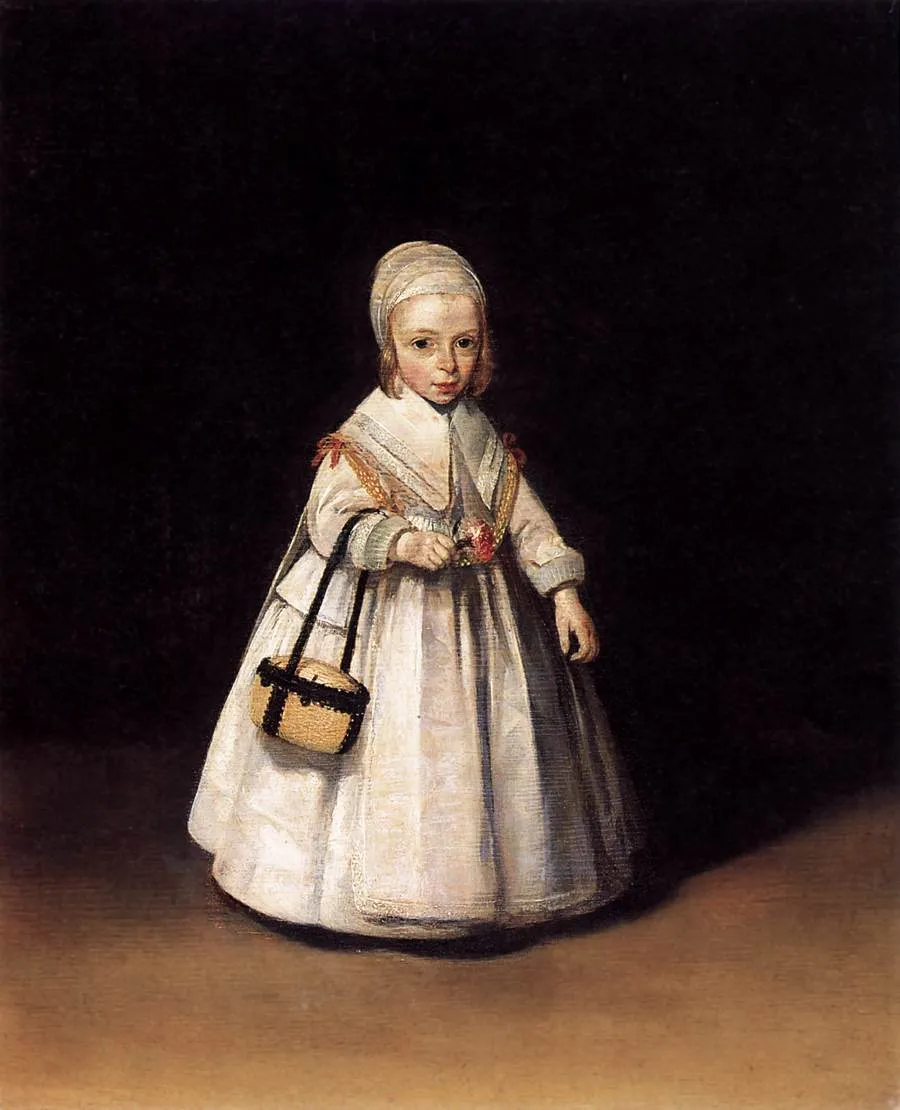
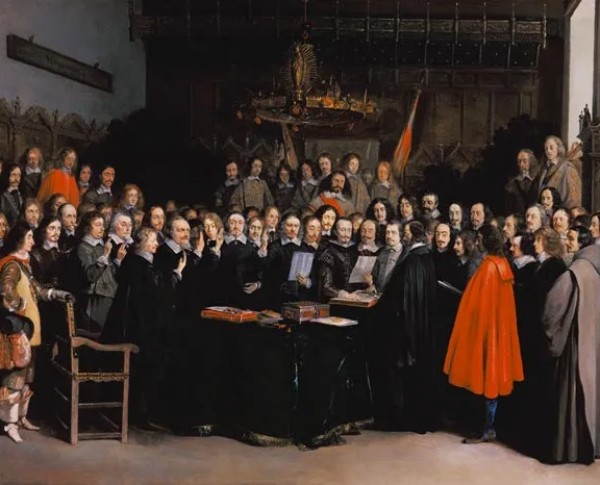
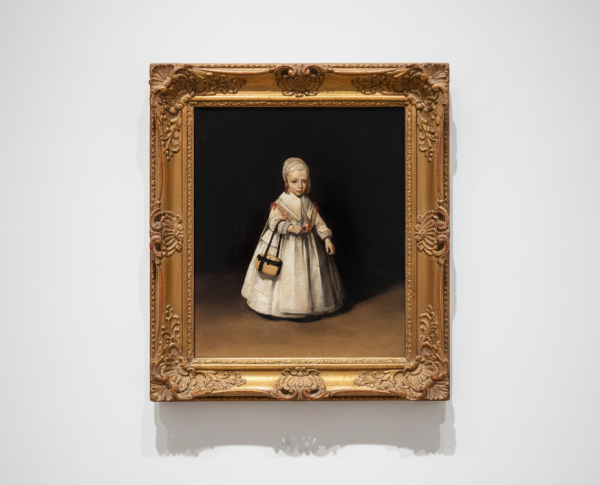
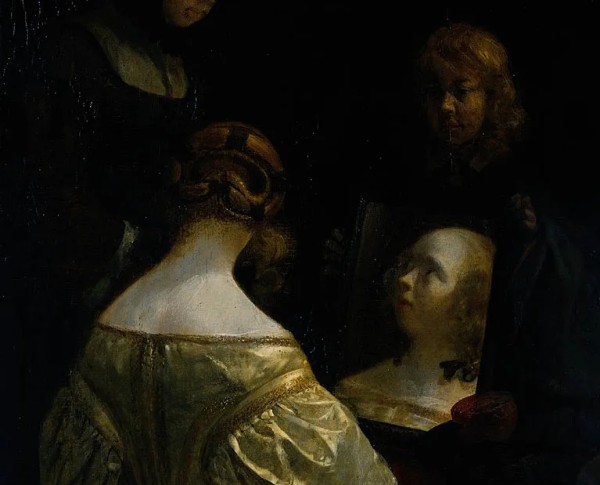
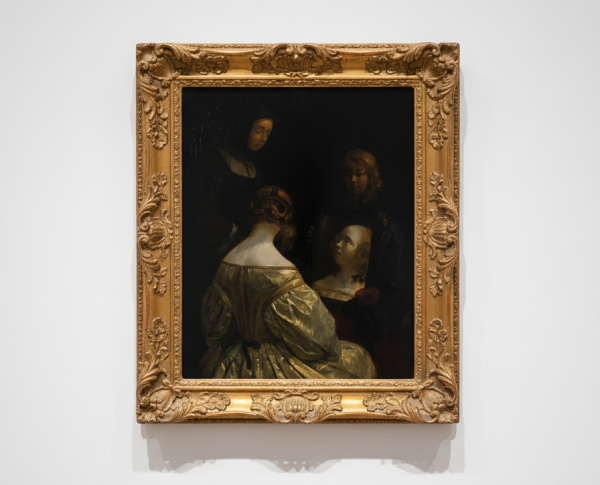
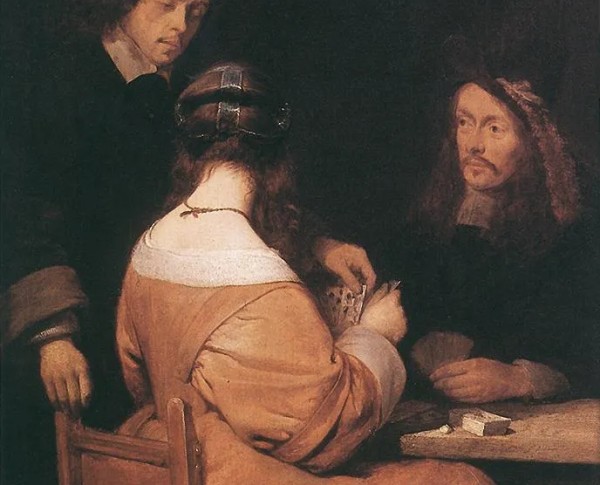
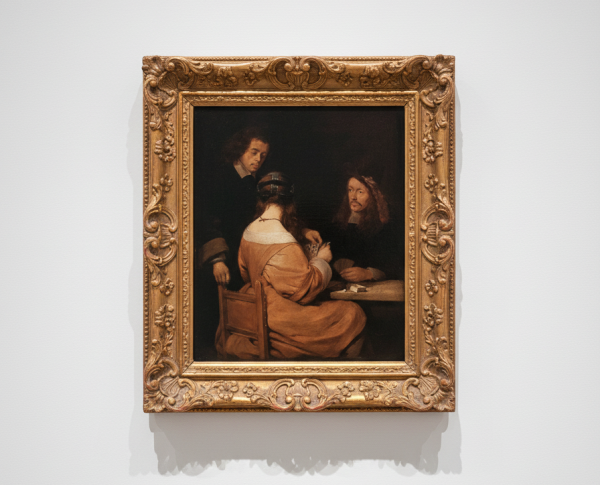
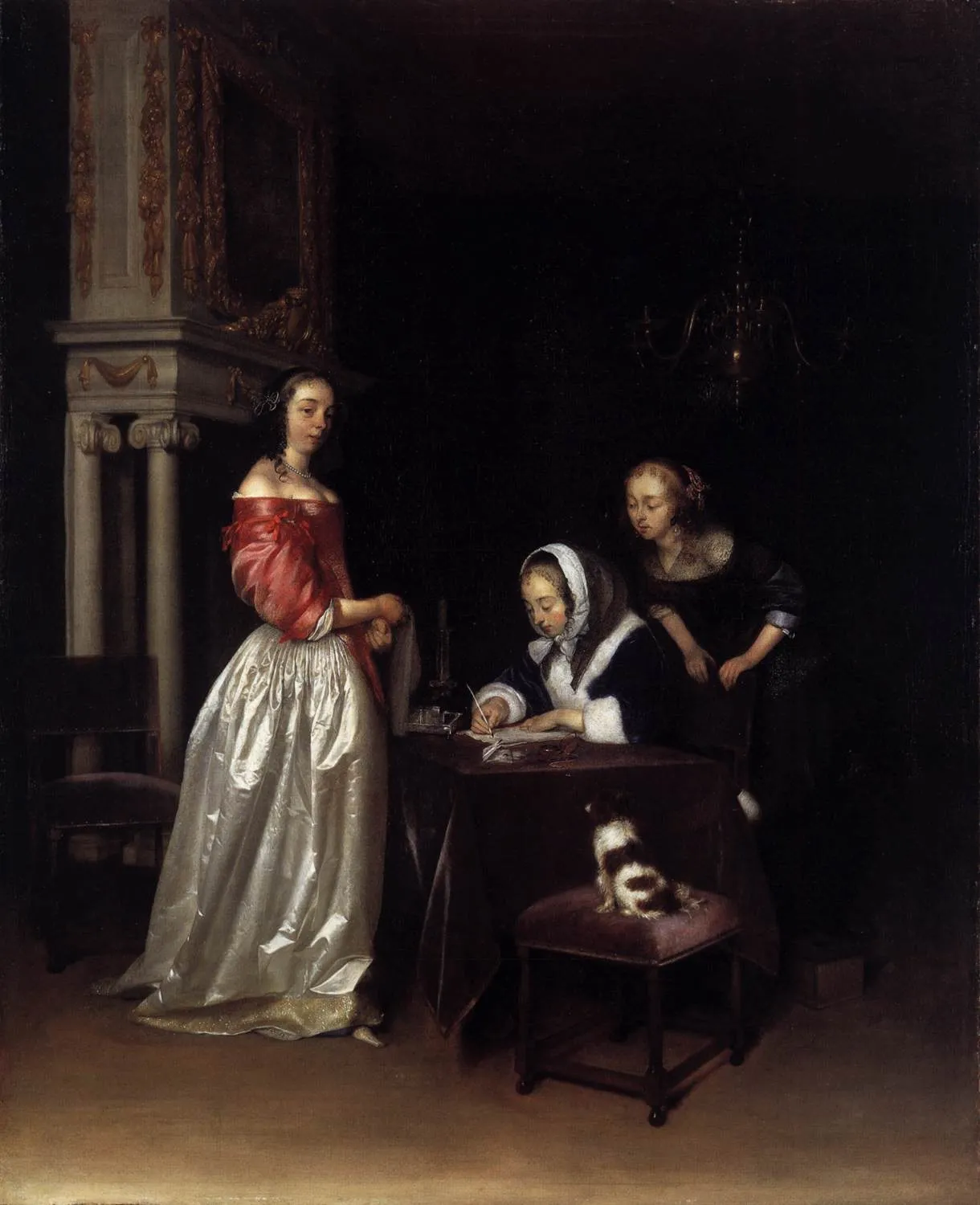
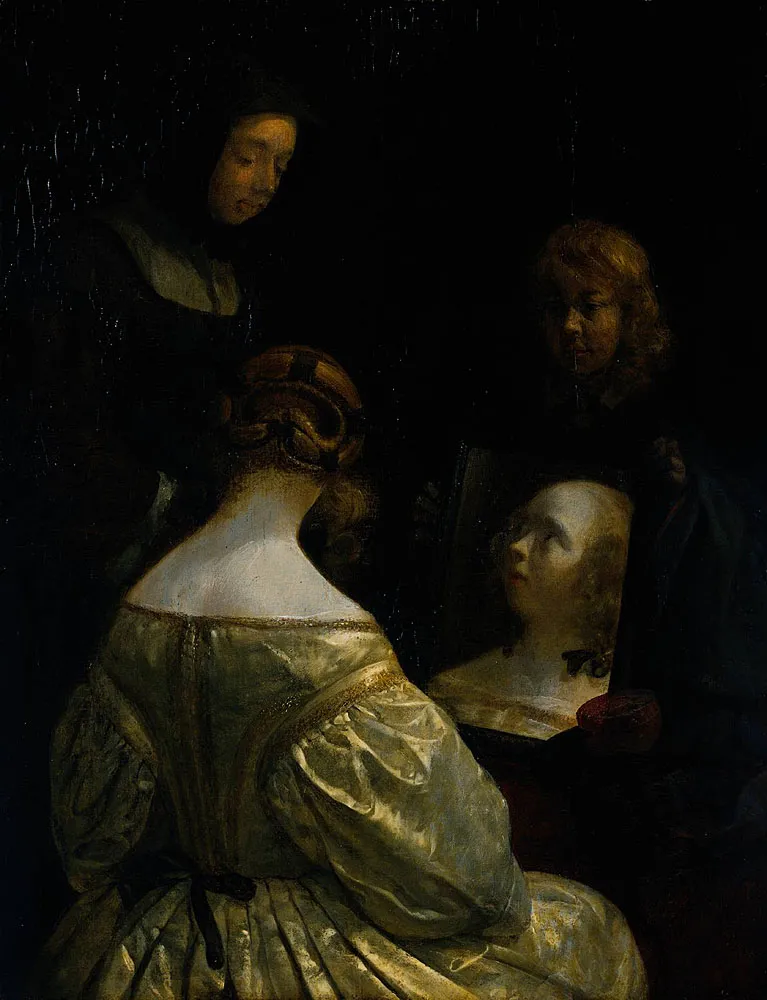
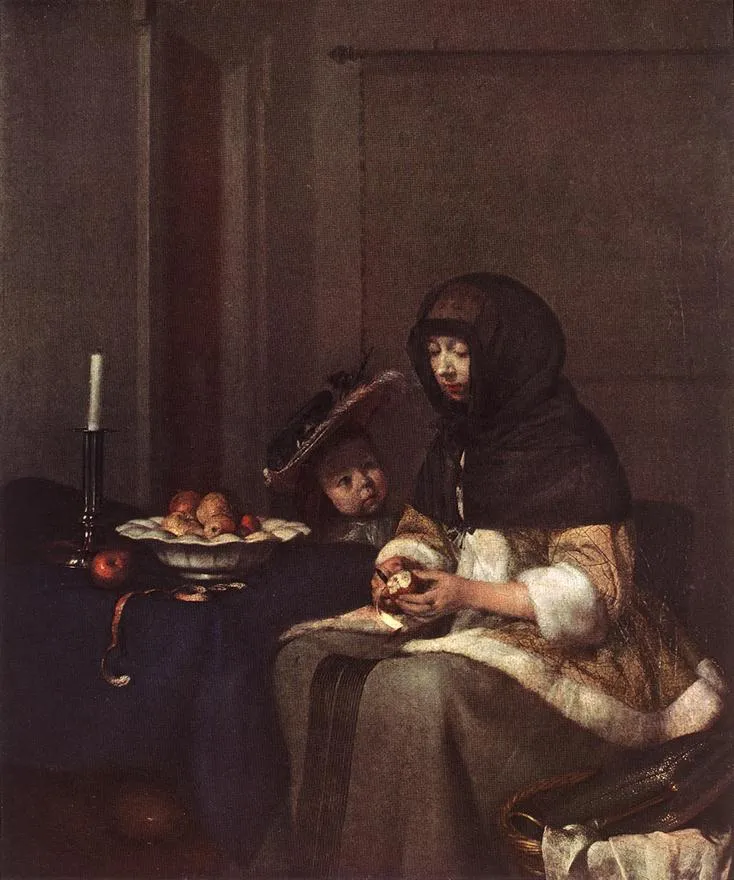
Gerard Terborch’s technique in "Curiosity" demonstrates the meticulous skill required for oil on canvas masterpieces during the Baroque era. Each brushstroke brings life to the fabrics and expressions, revealing the artist’s dedication to realism and subtlety. Terborch’s approach can also be seen in related pieces such as "A Woman Spinning" and "Mother Combing the Hair of Her Child," all showcasing the delicate interplay of light and texture that defines his celebrated oeuvre.
Within "Curiosity," Terborch weaves a narrative rich with symbolism, a hallmark of Baroque storytelling. The painting’s composition invites viewers to ponder the relationship between its figures, much like in "A Guard Room Interior With A Soldier Blowing Smoke In The Face Of His Sleeping Companion." Each detail enhances the intrigue, making this fine art painting for sale a conversation piece for collectors and admirers of symbolic storytelling in seventeenth-century art.
For art collectors, owning "Curiosity" by Gerard Terborch is an opportunity to possess a significant work from the Baroque movement. The painting’s exceptional oil on canvas technique and historical value make it a sought-after addition, alongside other masterpieces like "Gallant Conversation." Its presence in a collection elevates the space, offering a timeless connection to the past and a testament to Terborch’s enduring influence on the world of fine art painting for sale.
When Art Meets History
“Curiosity” by Gerard Terborch is a remarkable example of Baroque artistry, created during a period rich with cultural and historical significance. This hand-painted oil painting captures the essence of 17th-century Dutch life, much like Terborch’s contemporaries in works such as “A lute player” and “Saint Matthew and the Angel.” The artist’s attention to detail and narrative skill make “Curiosity” a timeless piece, reflecting the social and artistic movements of its era.
Techniques That Speak
Gerard Terborch’s mastery is evident in the exquisite oil on canvas technique used in “Curiosity.” The painting showcases the smooth blending and delicate textures typical of the Baroque movement, similar to masterpieces like “Self-Portrait” and “Amor Vincit Omnia.” Terborch’s careful rendering of fabrics and subtle lighting effects create a lifelike atmosphere, making this oil on canvas a standout among Baroque fine art. The artist’s skill elevates everyday scenes into visual poetry.
Emotions on Display
“Curiosity” invites viewers to experience a moment of quiet intrigue, as Terborch skillfully conveys emotion through gesture and expression. This fine art painting for sale captures the subtle interplay between characters, drawing parallels with other emotive Baroque works such as “John the Baptist.” The artist’s ability to depict nuanced feelings sets “Curiosity” apart, allowing modern audiences to connect deeply with the scene and appreciate the emotional richness characteristic of the Baroque movement.
Coveted by Collectors
Collectors highly prize “Curiosity” by Gerard Terborch for its exceptional craftsmanship and historical value. As a hand-painted oil painting from the Baroque period, it stands alongside renowned pieces like “A lute player” and “Amor Vincit Omnia.” The painting’s rarity and the artist’s reputation make it a sought-after addition to any collection, appealing to those who appreciate the legacy of Baroque masters and the timeless beauty of Dutch fine art.
Related Baroque Hand-Painted Oil Paintings by Other Artists
Other Famous Baroque Artists:
Frequently Asked Questions About Curiosity
What is the historical context of "Curiosity" by Gerard Terborch?
"Curiosity" was painted during the Dutch Golden Age, a period characterized by great wealth and cultural achievement in the Netherlands during the 17th century. Terborch, known for his genre scenes, captured the nuances of domestic life and social interactions typical of this era.
What artistic techniques did Gerard Terborch employ in "Curiosity"?
Terborch utilized a refined technique of chiaroscuro, which enhances the three-dimensionality of figures through contrasting light and shadow. His meticulous attention to detail and texture, particularly in fabrics and facial expressions, exemplifies his mastery of oil painting.
What themes are explored in "Curiosity"?
The painting explores themes of curiosity and the pursuit of knowledge, as depicted through the interaction between the figures. It reflects the human inclination to seek understanding and the social dynamics of inquiry and conversation.
How does "Curiosity" reflect the social customs of the 17th century?
The painting illustrates the intimate setting of a domestic space, highlighting the importance of social gatherings and conversations in 17th-century Dutch society. It captures the essence of polite society and the role of curiosity in fostering relationships.
What symbols are present in "Curiosity" and what do they represent?
In "Curiosity," objects such as books and letters symbolize knowledge and communication. The act of looking and engaging with these items signifies the value placed on learning and intellectual exchange during the period.
What is the significance of the figures portrayed in "Curiosity"?
The figures in "Curiosity" represent archetypes of curiosity and engagement, embodying the traits of inquisitiveness and contemplation. Their expressions and postures convey a sense of intrigue and interaction, central to the painting's narrative.
How does "Curiosity" compare to other works by Gerard Terborch?
Compared to other works by Terborch, "Curiosity" stands out for its focus on interpersonal dynamics and psychological depth. While many of his paintings depict solitary figures, this piece emphasizes interaction, showcasing his versatility as an artist.
What influence did "Curiosity" have on later artists?
"Curiosity" has influenced later artists by exemplifying the genre of intimate domestic scenes. Its exploration of human emotion and social interaction can be seen echoed in the works of subsequent genre painters who sought to capture the essence of everyday life.
What materials and methods did Terborch use for "Curiosity"?
Gerard Terborch primarily used oil paints on canvas for "Curiosity." His method involved layering thin glazes to achieve luminosity and depth, a technique that allowed him to create rich textures and vibrant colors characteristic of his style.
What is the legacy of "Curiosity" in the context of art history?
The legacy of "Curiosity" lies in its representation of the Dutch Golden Age's cultural values, particularly the emphasis on intellectual curiosity and social interaction. It remains a significant work that continues to be studied for its artistic merit and historical relevance.






















_GFM_Painting_(1).webp)


 100% Hand-Painted: Finished in 3-6 Weeks

.png)















_(1).webp)