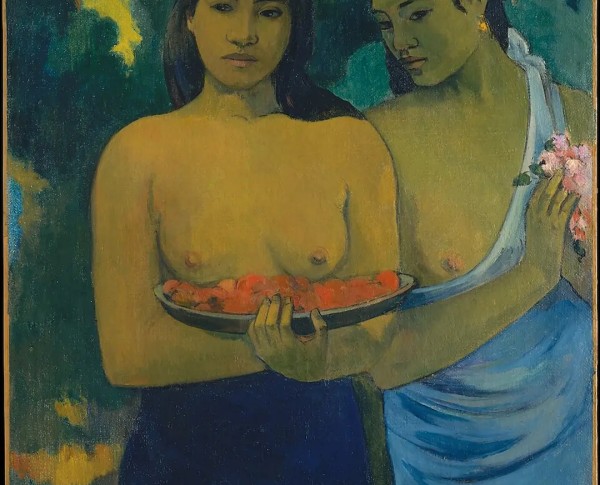
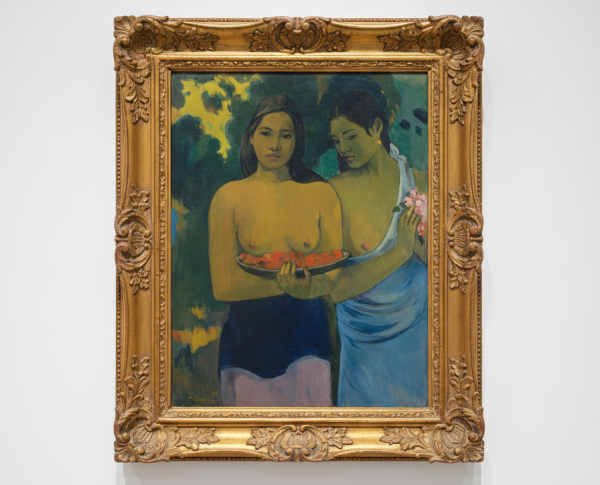
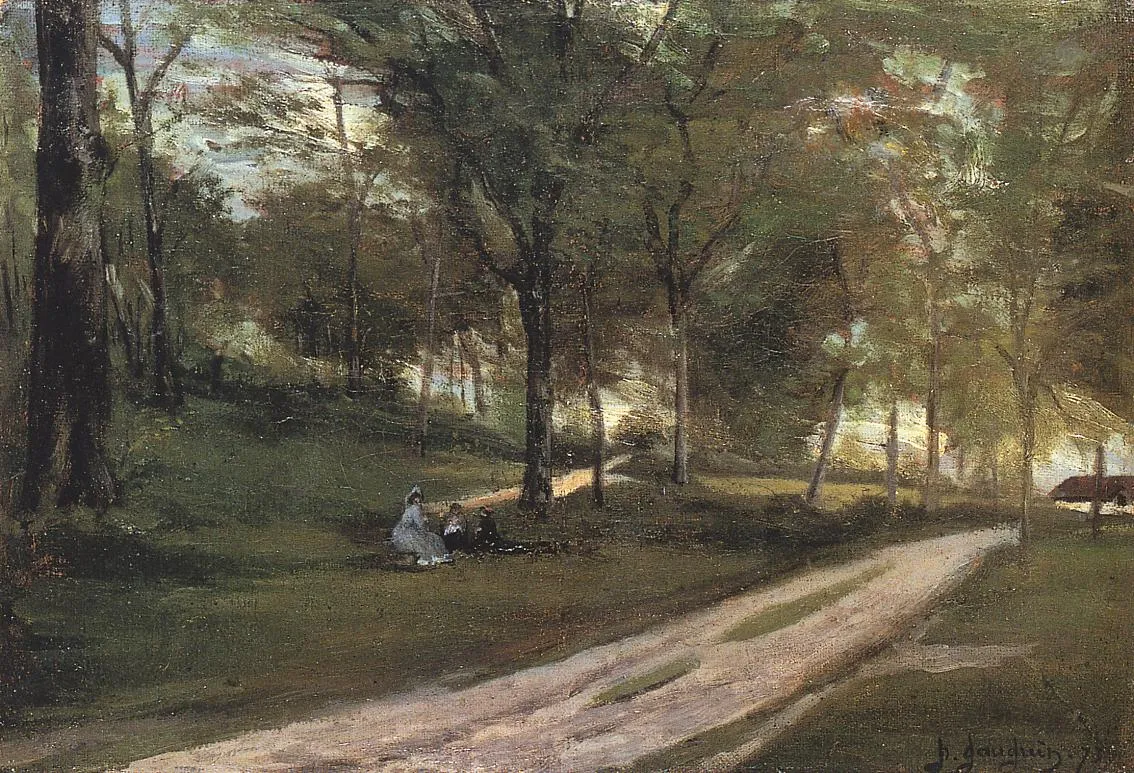
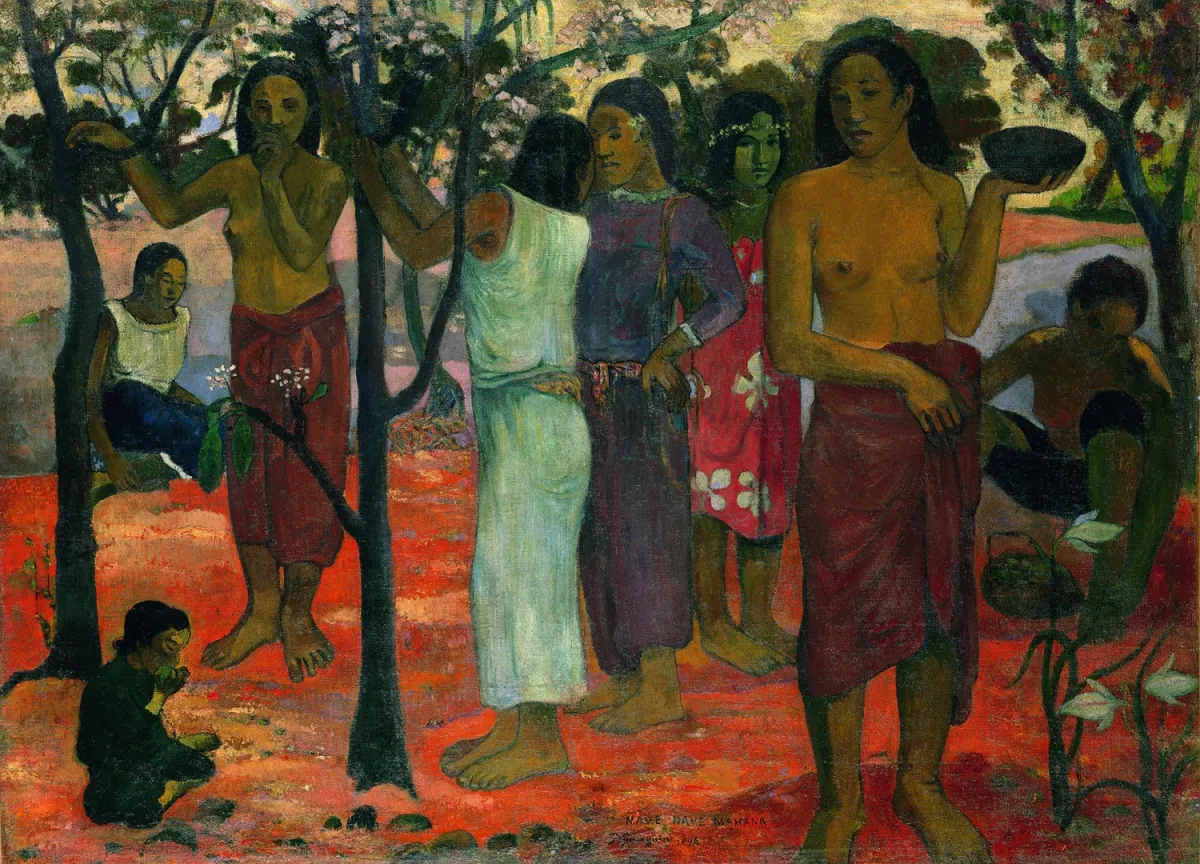
Paul Gauguin’s expertise is evident in every detail of "In the forest Saint Cloud II," a remarkable oil on canvas. The painting’s vibrant colors and dynamic brushwork exemplify the Post-Impressionism movement’s break from tradition. Gauguin’s ability to capture mood and atmosphere sets this piece apart. Those who appreciate his technique may also enjoy "Nave Nave Mahana" and "The Woodcutter," both reflecting the same mastery and expressive style found in this work.
"In the forest Saint Cloud II" weaves together stories and symbols reminiscent of Gauguin’s fascination with the unseen. This fine art painting for sale invites viewers to interpret the interplay of light and shadow, encouraging personal reflection. Gauguin’s Post-Impressionist vision comes alive, much like in his other celebrated pieces such as "Aha Oe Feii?" and "Chicken Coop." Each element within the canvas adds layers of meaning for art lovers to discover.
Owning "In the forest Saint Cloud II" means adding a hand-painted oil painting by Paul Gauguin to your collection—a true collector’s treasure. This Post-Impressionist masterpiece resonates with those who value both history and artistry. Its timeless appeal is complemented by the availability of related products, including "Day of the God" and "Nave Nave Mahana," making it perfect for anyone seeking exceptional fine art painting for sale to enhance their space.
When Art Meets History
"In the forest Saint Cloud II" by Paul Gauguin stands as an evocative testament to the Post-Impressionism movement. Painted during a period of immense artistic innovation, this hand-painted oil painting reflects Gauguin’s exploration of color and form. Alongside related works like "Vincent's Boarding House in Hackford Road, Brixton, London" and "Vase With Red Poppies," Gauguin’s masterpiece offers insight into the evolution of modern art, bridging the gap between Impressionism and emerging avant-garde styles.
Techniques That Speak
Paul Gauguin’s "In the forest Saint Cloud II" showcases his mastery of oil on canvas, a medium favored by many Post-Impressionist artists. The painting employs bold brushstrokes and vibrant, unblended colors, creating a dynamic interplay of light and shadow. Like "Wheat Field with a Lark" and "Cafe Terrace on the Place du Forum," this work demonstrates Gauguin’s innovative approach to depicting nature, making it a standout example of Post-Impressionist technique and artistic experimentation.
Emotions on Display
With "In the forest Saint Cloud II," Gauguin invites viewers into a world of contemplative solitude. The fine art painting for sale evokes a sense of mystery and tranquility, much like "Boats on the Beach of Saintes-Maries." Gauguin’s use of color and composition draws out deep emotional responses, characteristic of the Post-Impressionism movement. Through this work, the artist conveys his personal connection to the landscape, leaving a lasting impression on those who experience it.
Coveted by Collectors
As a significant piece within the Post-Impressionism movement, "In the forest Saint Cloud II" by Paul Gauguin is highly sought after by art enthusiasts and collectors. The hand-painted oil painting stands alongside masterpieces such as "Vase With Red Poppies" and "Cafe Terrace on the Place du Forum," making it a valuable addition to any collection. Its historical importance and artistic brilliance ensure its enduring appeal among those who appreciate fine art’s transformative power.
Related Post-Impressionism Hand-Painted Oil Paintings by Other Artists
Other Famous Post-Impressionism Artists:
Frequently Asked Questions About In the forest Saint Cloud II
What is the historical context of "In the forest Saint Cloud II"?
"In the forest Saint Cloud II" was painted by Paul Gauguin in 1886, during a period when he was exploring the use of color and form in new ways, influenced by Impressionism and Symbolism. This work reflects his interest in the natural landscape and his desire to convey deeper emotional and spiritual meanings through art.
What artistic techniques did Gauguin employ in this painting?
Gauguin utilized bold colors and simplified forms in "In the forest Saint Cloud II," moving away from realistic representation to create a more expressive and symbolic interpretation of the landscape. His use of flat areas of color and strong outlines contributes to the overall emotional impact of the work.
What themes are present in "In the forest Saint Cloud II"?
The painting explores themes of nature, tranquility, and introspection. Gauguin sought to capture the essence of the forest as a place of refuge and spiritual renewal, inviting viewers to reflect on their own relationship with the natural world.
How does "In the forest Saint Cloud II" reflect Gauguin's artistic philosophy?
Gauguin believed that art should transcend mere representation and evoke deeper emotional responses. In "In the forest Saint Cloud II," he aims to express the spiritual connection between humanity and nature, aligning with his philosophy of using art as a means of personal and cultural exploration.
What influences can be seen in "In the forest Saint Cloud II"?
The painting shows influences of Impressionism, particularly in its loose brushwork and emphasis on light. However, Gauguin diverges from this style by incorporating Symbolist elements, focusing on the emotional resonance of the scene rather than its realistic depiction.
What is the significance of the forest setting in the painting?
The forest setting in "In the forest Saint Cloud II" symbolizes a retreat from the chaos of urban life, representing a space for contemplation and connection with nature. It reflects Gauguin's fascination with the spiritual and mystical aspects of the natural world.
How does color play a role in "In the forest Saint Cloud II"?
Color is a fundamental element in "In the forest Saint Cloud II," as Gauguin uses vibrant hues to convey emotion and atmosphere. The contrasting colors create a sense of depth and movement, enhancing the viewer's experience of the forest's tranquility and beauty.
What is the impact of "In the forest Saint Cloud II" on modern art?
"In the forest Saint Cloud II" is considered a precursor to modern art movements, such as Fauvism and Expressionism, due to its bold use of color and abstraction. Gauguin's innovative approach has influenced countless artists in their exploration of color and emotional expression.
How does "In the forest Saint Cloud II" compare to Gauguin's other works?
Compared to Gauguin's other works, "In the forest Saint Cloud II" showcases his transition towards a more symbolic and expressive style. While many of his later works focus on exotic themes and cultures, this painting reflects his deep appreciation for the French landscape and its spiritual significance.
What can viewers learn from "In the forest Saint Cloud II"?
Viewers can learn about the importance of nature in art and the potential for landscapes to convey profound emotional and spiritual experiences. The painting encourages a deeper appreciation for the natural world and invites reflection on one's own connection to it.






















_GFM_Painting_(1).webp)


 100% Hand-Painted: Finished in 3-6 Weeks

.png)















_(1).webp)