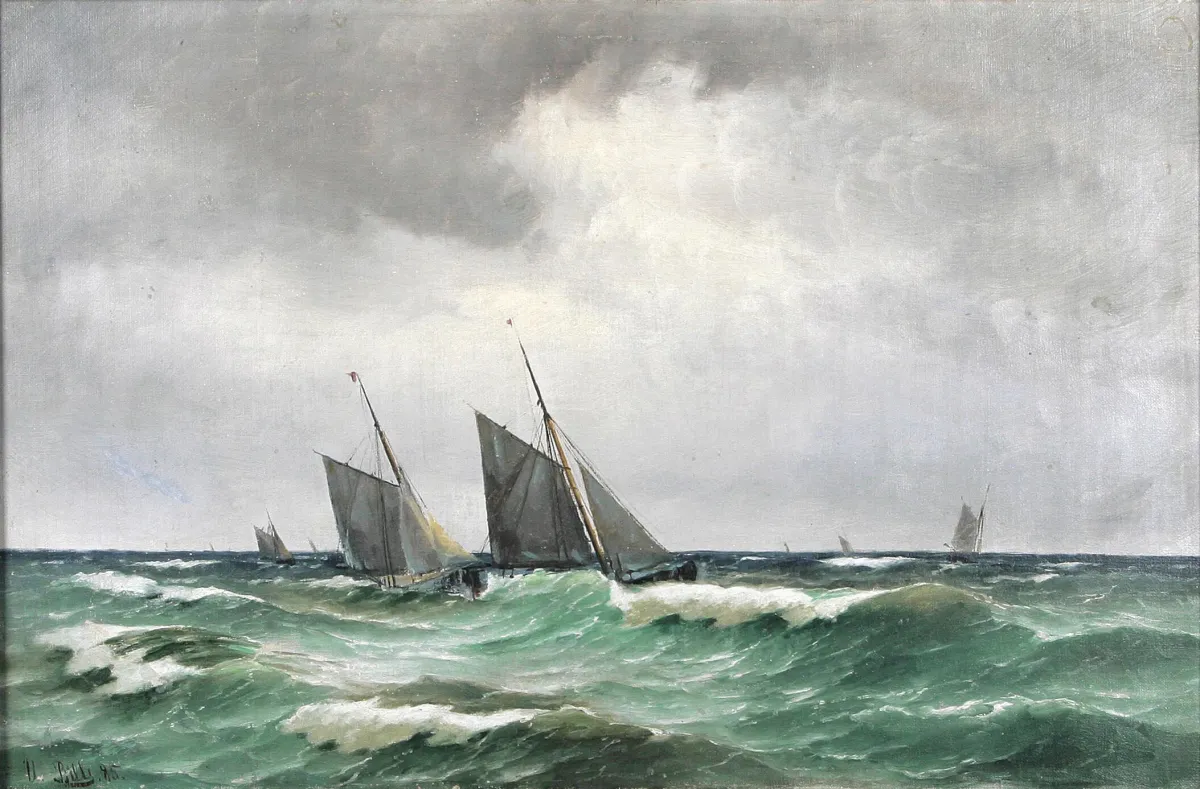
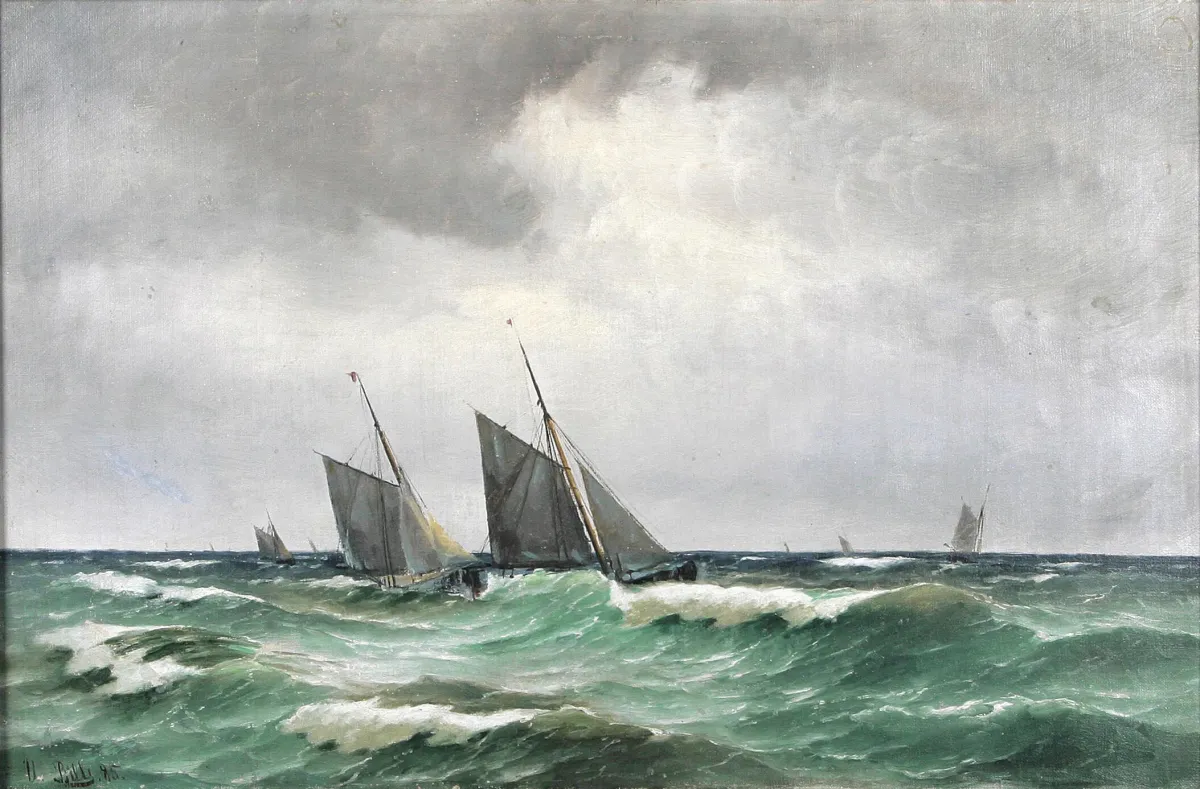
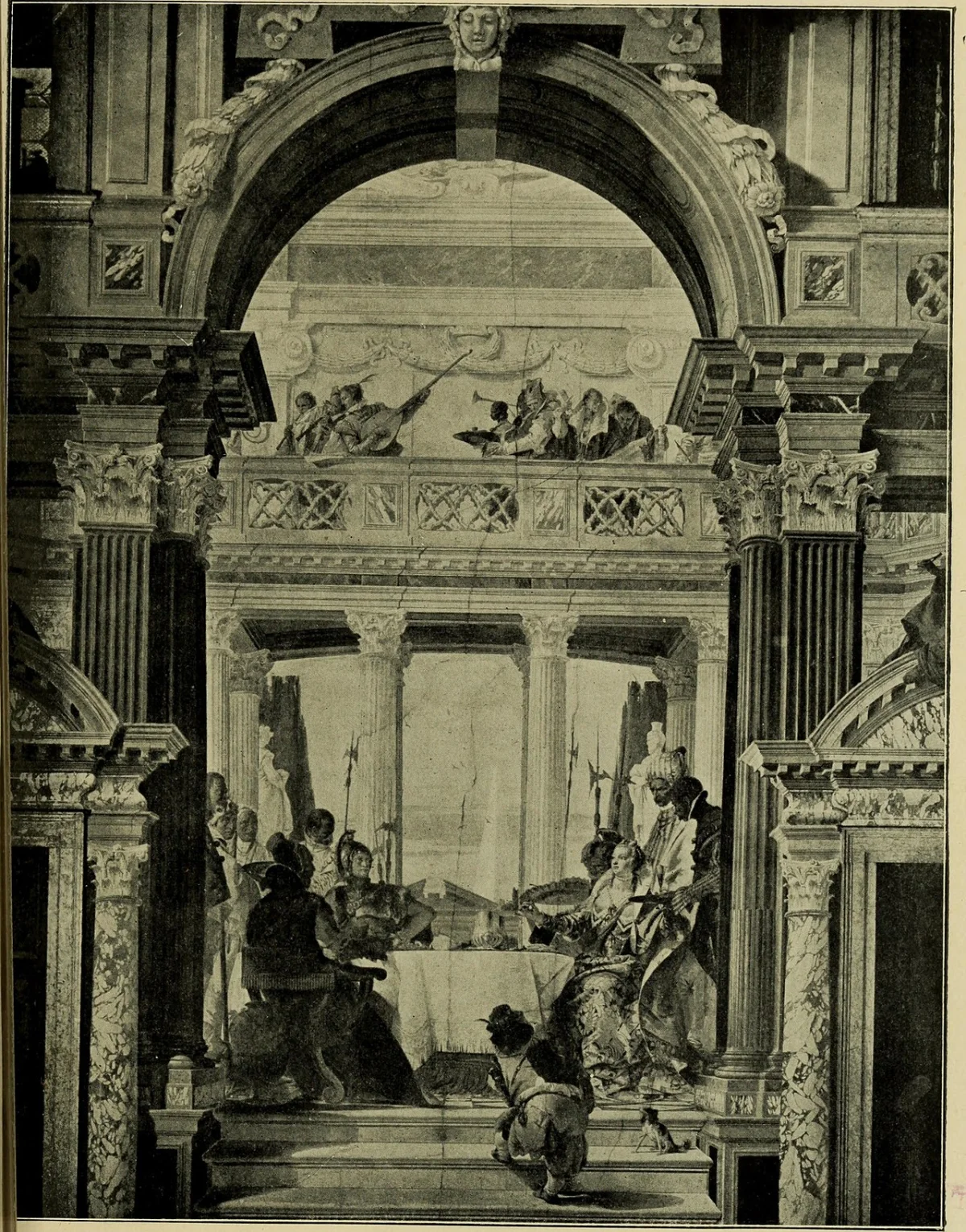
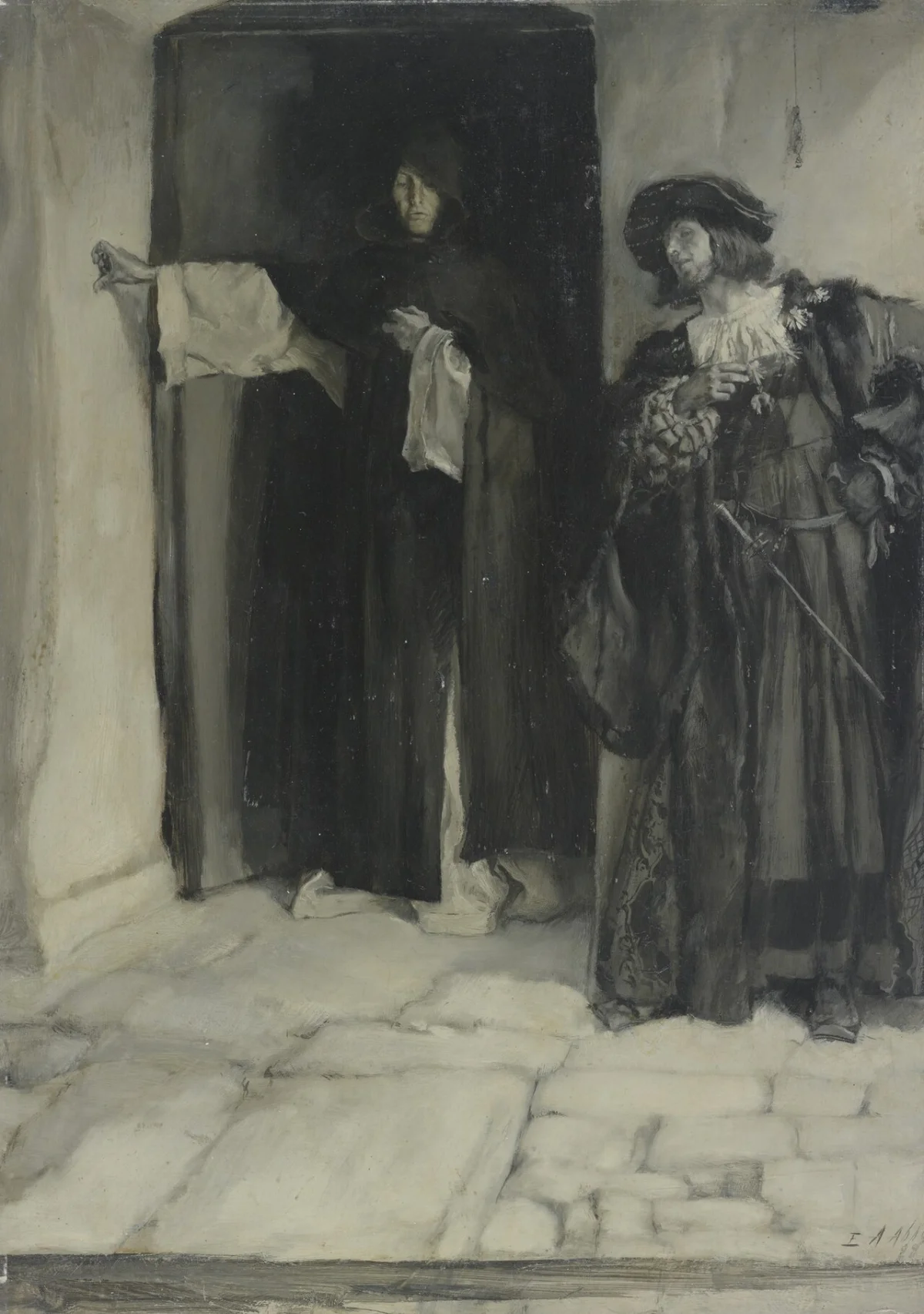
Edwin Austin Abbey demonstrates his exceptional technique in “Seascape with Sailing Boat,” showcasing his command over oil on canvas. Each brushstroke captures the movement and light of the ocean, reflecting the ideals of the Aestheticism movement. The painting’s texture and color palette are reminiscent of Abbey’s other works, including “Sketch for mural decoration” and “Study for Antony and Cleopatra,” making this oil on canvas a must-have for admirers of refined artistry.
Within the serene waves of “Seascape with Sailing Boat,” Abbey weaves subtle narratives and symbols that invite reflection. This fine art painting for sale is more than a visual delight; it is a testament to the artist’s storytelling prowess rooted in the Aestheticism movement. Collectors who appreciate depth often seek companion pieces like “Study for Shakespeare” or “Study: Head of a woman for Sir Galahad,” which further illuminate Abbey’s symbolic approach to art.
For art collectors, “Seascape” by Edwin Austin Abbey is a prized hand-painted oil painting that embodies the spirit of the Aestheticism movement. Its timeless appeal and historical significance make it a standout piece among fine art painting for sale. Those who value Abbey’s legacy may also consider acquiring related artworks such as “Landscape study” and “Study for Antony and Cleopatra” to enrich their collections with the artist’s diverse creative expressions.
When Art Meets History
"Seascape with Sailing Boat" by Edwin Austin Abbey stands as a remarkable example of the Aestheticism movement, which valued beauty and visual pleasure above all else. This hand-painted oil painting reflects Abbey's mastery and deep understanding of the artistic trends of his time. Created during a period rich in artistic innovation, "Seascape with Sailing Boat" shares its historical context with related paintings like "Liverpool from Wapping" and "Quai de Paris, Rouen," both of which also explore atmospheric effects and nuanced color palettes.
Techniques That Speak
Abbey’s "Seascape with Sailing Boat" demonstrates his exceptional command of oil on canvas, utilizing delicate brushwork and harmonious color schemes typical of the Aestheticism movement. The artist's technique captures the subtle interplay of light and water, echoing the tranquil moods found in related works such as "A Moonlit Evening" and "A House in a Clearing." Through skilled layering and blending, Abbey transforms traditional seascape themes into a uniquely evocative visual experience that is both immersive and timeless.
Emotions on Display
In "Seascape with Sailing Boat," Edwin Austin Abbey infuses his composition with a serene, contemplative mood that is a hallmark of the Aestheticism movement. This fine art painting for sale invites viewers to lose themselves in its tranquil atmosphere, much like Abbey’s "Shipping on the Clyde," which also captures a sense of quiet reflection. The gentle movement of waves and soft interplay of colors evoke emotions of peace and introspection, making "Seascape" a cherished work among art lovers.
Coveted by Collectors
Collectors seeking a hand-painted oil painting that embodies the ideals of the Aestheticism movement often turn to Abbey’s "Seascape with Sailing Boat." Its exquisite detail and historical significance enhance its desirability, much like other notable pieces such as "Liverpool from Wapping" and "A Moonlit Evening." As a fine art painting for sale, "Seascape" appeals to those who appreciate both the technical mastery of oil on canvas and the enduring legacy of Edwin Austin Abbey’s artistic vision.
Related Aestheticism Hand-Painted Oil Paintings by Other Artists
Other Famous Aestheticism Artists:
Frequently Asked Questions About Seascape
What is the historical context of Edwin Austin Abbey's "Seascape with Sailing Boat"?
"Seascape with Sailing Boat" was created during the late 19th century, a period marked by a growing interest in natural landscapes and the exploration of light and color in art. Abbey, an American artist, was influenced by the Impressionist movement, which sought to capture the ephemeral qualities of nature.
What artistic techniques did Abbey employ in "Seascape with Sailing Boat"?
In "Seascape," Abbey utilized loose brushwork and a vibrant color palette to convey the movement of water and the atmospheric effects of light. His technique reflects an Impressionistic approach, focusing on the overall impression rather than fine detail.
What themes are explored in "Seascape with Sailing Boat"?
The primary themes in "Seascape with Sailing Boat" include the beauty and power of nature, the transience of time, and the relationship between humanity and the natural world. The painting invites viewers to reflect on their own experiences with the sea.
How does "Seascape with Sailing Boat" reflect the Romantic ideals of its time?
"Seascape" embodies Romantic ideals by emphasizing emotion, nature's grandeur, and the sublime. Abbey captures the sea's vastness, evoking feelings of awe and contemplation, which are central to Romantic art.
What symbolic meanings can be derived from the elements in "Seascape with Sailing Boat"?
The sea often symbolizes the unconscious mind, mystery, and the passage of time. In "Seascape," the turbulent waves may represent life's challenges, while the calm horizon suggests hope and tranquility.
How does "Seascape with Sailing Boat" compare to other seascapes of the same era?
Compared to other seascapes of the late 19th century, Abbey's "Seascape" stands out for its dynamic composition and emotional depth. While many artists focused on serene coastal scenes, Abbey's work captures the raw energy of the ocean.
What influence did Edwin Austin Abbey have on American art?
Abbey was a pivotal figure in American art, particularly in the realms of illustration and painting. His work, including "Seascape," helped bridge the gap between traditional techniques and modern artistic expressions, influencing future generations of artists.
What materials and mediums did Abbey use for "Seascape with Sailing Boat"?
Abbey primarily worked with oil paints on canvas for "Seascape." This medium allowed him to achieve rich textures and vibrant colors, essential for depicting the fluidity and luminosity of the sea.
What is the significance of "Seascape with Sailing Boat" in Abbey's body of work?
"Seascape" is significant as it showcases Abbey's mastery of landscape painting and his ability to evoke emotion through natural scenes. It represents a key moment in his artistic evolution, highlighting his transition towards more expressive works.
How has "Seascape with Sailing Boat" been received by critics and art historians?
Critics and art historians have praised "Seascape" for its innovative approach to color and form. It is often regarded as a quintessential example of Abbey's skill in capturing the essence of nature, earning a respected place in American art history.






















_GFM_Painting_(1).webp)


 100% Hand-Painted: Finished in 3-6 Weeks

.png)



















_(1).webp)