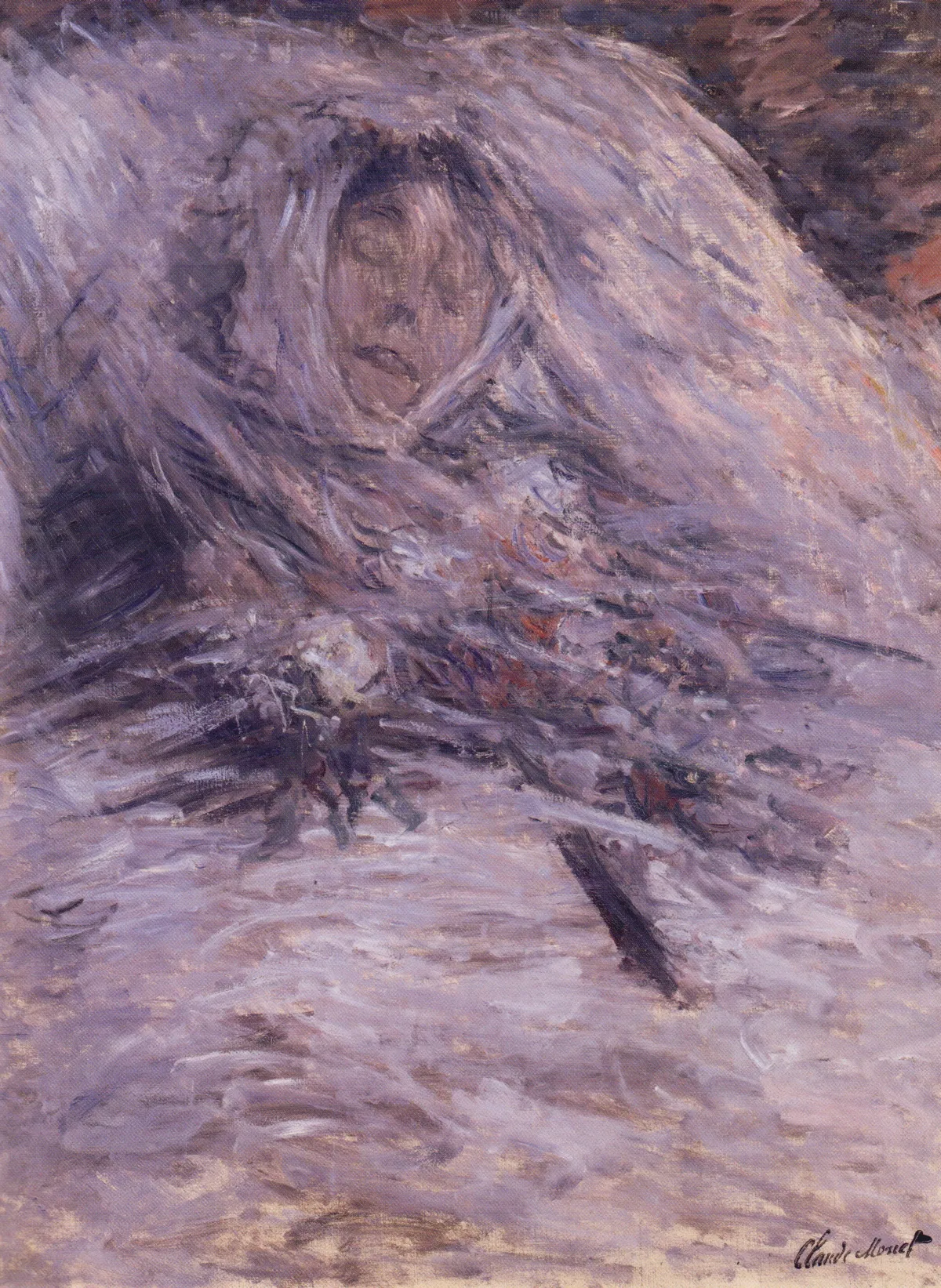
Monet’s skillful use of oil on canvas in “Camille Monet on her deathbed” exemplifies his mastery of Impressionism’s techniques. Each brushstroke conveys not only form but also the fleeting nature of life, a hallmark of his style. This painting, alongside works such as “Lighthouse at the Hospice” and “Le Grand Canal, Venice,” demonstrates Monet’s unique approach to color and light, making his pieces highly sought after by collectors and art enthusiasts alike.
“Camille Monet on her deathbed” is more than a fine art painting for sale; it is a narrative of love, loss, and memory. Monet’s portrayal of Camille resonates with symbolism, echoing themes found in “Study Of A Figure Outdoors Woman With A Parasol, Facing Left” and “Port-Goulphar, Belle-Île.” Through soft hues and expressive lines, Monet invites viewers to reflect on the impermanence of life, making each viewing a deeply moving experience within the Impressionism movement.
For collectors, “Camille Monet on her deathbed” represents an extraordinary opportunity to own a piece of art history. As with other hand-painted oil paintings from Monet, this work’s rarity and emotional depth increase its desirability. Collectors often seek related products such as “Impression, Sunrise” and “Garden at Sainte-Adresse” to complement their collections, ensuring that Monet’s Impressionist masterpieces retain their place as treasured investments in fine art painting for sale.
When Art Meets History
"Camille Monet on her deathbed" by Claude Monet is a poignant representation from the Impressionism movement, capturing a deeply personal moment in art history. This hand-painted oil painting not only immortalizes Monet's beloved wife but also marks a turning point in his artistic journey. Similar to works like "Blue Dancers, c.1899" and "Two Sisters," this masterpiece intertwines personal narrative with historical context, making it a significant piece for enthusiasts and historians alike.
Techniques That Speak
Claude Monet’s "Camille Monet on her deathbed" demonstrates his mastery of oil on canvas, employing loose brushwork and subtle color harmonies characteristic of Impressionism. The painting’s ethereal quality is echoed in related works such as "A Girl with a Watering Can" and "Umbrellas." Monet’s innovative techniques in this oil on canvas composition emphasize fleeting light and emotion, inviting viewers to experience the intimate atmosphere he so skillfully conveys.
Emotions on Display
In "Camille Monet on her deathbed," Monet channels raw emotion, crafting an evocative fine art painting for sale that resonates with viewers. The depth of feeling is evident in every brushstroke, capturing grief and love simultaneously. Like "And They Still Say Fish is Expensive!" the painting’s emotional impact is profound, drawing the audience into Monet’s personal world and the broader emotional landscape of Impressionism.
Coveted by Collectors
This hand-painted oil painting by Claude Monet is highly sought after by collectors who appreciate the Impressionism movement’s historical significance. Alongside masterpieces like "Blue Dancers, c.1899" and "Umbrellas," "Camille Monet on her deathbed" holds a special place in art collections. Its rarity and emotional depth make it a fine art painting for sale that continues to attract admiration and investment from connoisseurs worldwide.
Related Impressionism Hand-Painted Oil Paintings by Other Artists
Other Famous Impressionism Artists:
Frequently Asked Questions About Camille Monet on her deathbed
What is the historical significance of "Camille Monet on her deathbed"?
This painting holds historical significance as it captures a deeply personal moment in the life of Claude Monet, reflecting the profound impact of loss and grief on the artist's work and emotional state.
When was "Camille Monet on her deathbed" painted?
The artwork was painted in 1879, during a period marked by personal tragedy for Monet, as it depicts his beloved wife, Camille, shortly before her death.
What artistic techniques did Monet employ in this painting?
Monet utilized loose brushwork and a muted color palette to convey a sense of intimacy and somberness, emphasizing the emotional weight of the scene rather than focusing on precise details.
How does "Camille Monet on her deathbed" reflect Impressionist principles?
The painting reflects Impressionist principles through its emphasis on light, color, and the fleeting moment, showcasing Monet's ability to capture a personal and emotional experience in a spontaneous manner.
What symbolism can be found in the painting?
The painting symbolizes love, loss, and the passage of time, as it portrays Camille in a vulnerable state, inviting viewers to reflect on mortality and the transient nature of life.
How did Camille Monet's death influence Monet's later works?
Camille's death had a profound impact on Monet's later works, leading him to explore themes of memory, loss, and the passage of time, which became more pronounced in his subsequent paintings.
What emotions does "Camille Monet on her deathbed" evoke in viewers?
The painting evokes a sense of sorrow and reflection, prompting viewers to confront their own feelings about love, loss, and the fragility of life.
In what ways does this painting differ from Monet's other works?
This painting differs from Monet's other works in its somber subject matter and emotional depth, contrasting with his more vibrant and lively depictions of nature and landscapes.
What role did Camille Monet play in Claude Monet's artistic life?
Camille Monet was not only Monet's wife but also his muse and model, inspiring many of his works and significantly influencing his artistic vision and emotional expression.
Where is "Camille Monet on her deathbed" currently housed?
The painting is currently housed in the Musée d'Orsay in Paris, France, where it is part of the permanent collection showcasing Impressionist masterpieces.






















_GFM_Painting_(1).webp)


 100% Hand-Painted: Finished in 3-6 Weeks

.png)



















_(1).webp)