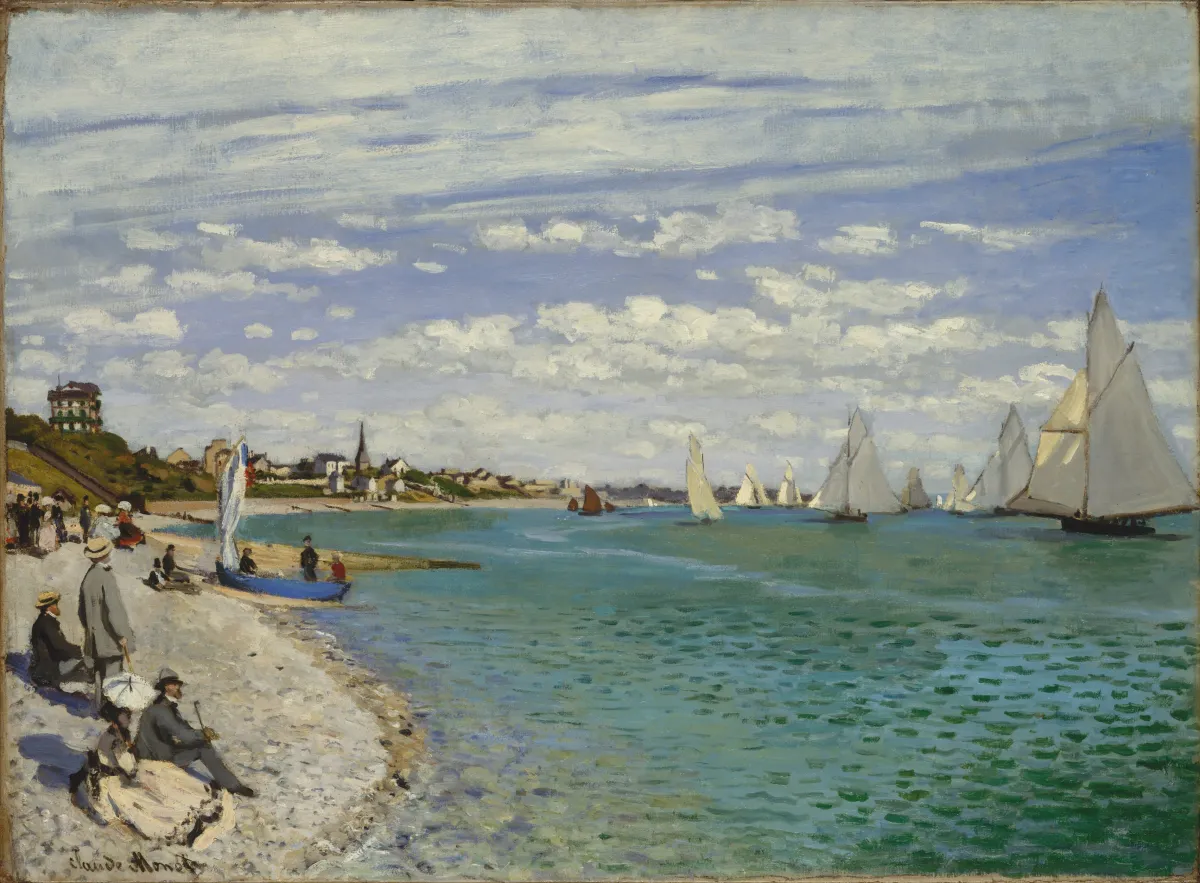
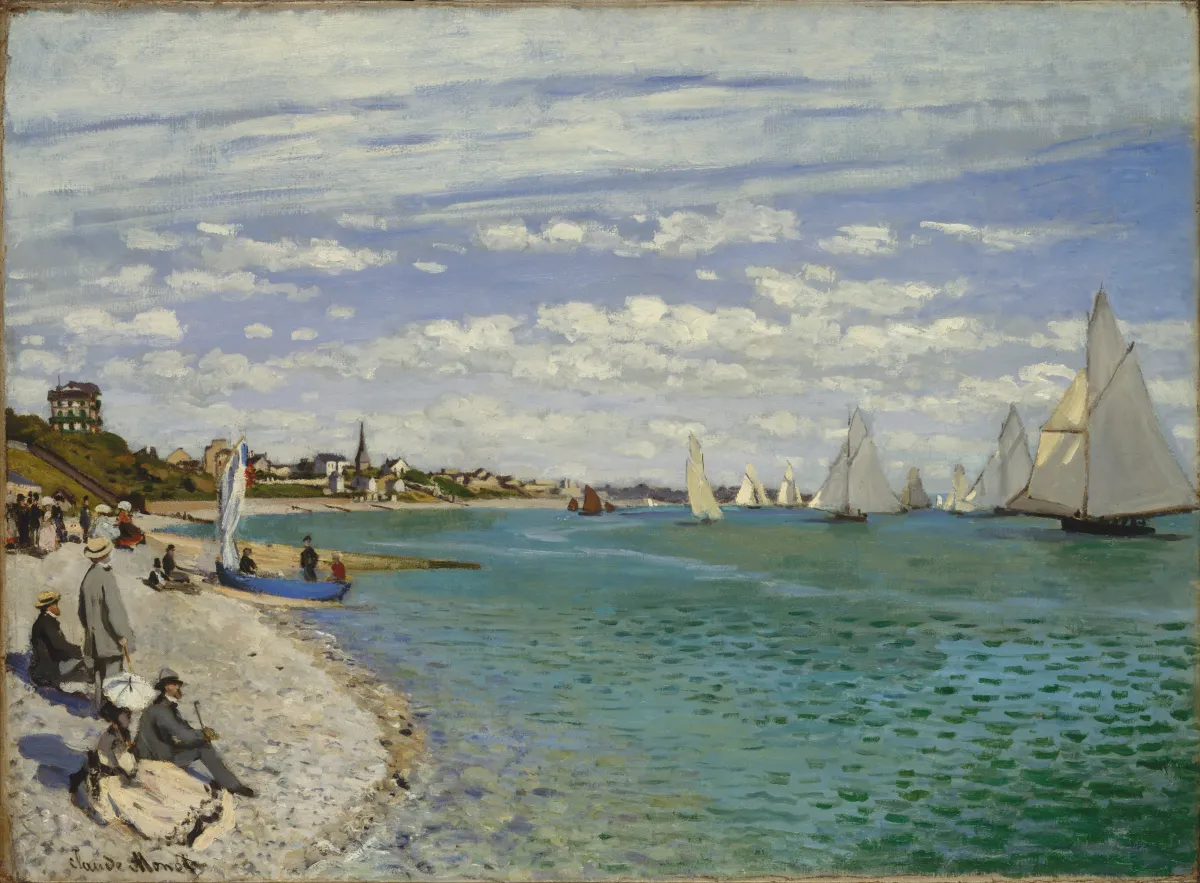
Monet’s expert use of oil on canvas in "Regatta at Sainte-Adresse" demonstrates his innovative approach to depicting fleeting moments. The vibrant brushstrokes and interplay of natural light are hallmarks of Impressionism, evident in related works such as "Camille" and "Houses of Parliament series". This painting invites viewers to appreciate the skill and creativity invested in each detail, making it a testament to Monet’s artistic mastery.
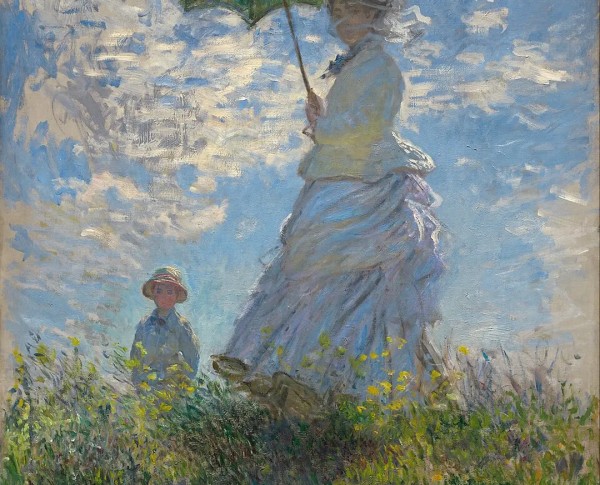
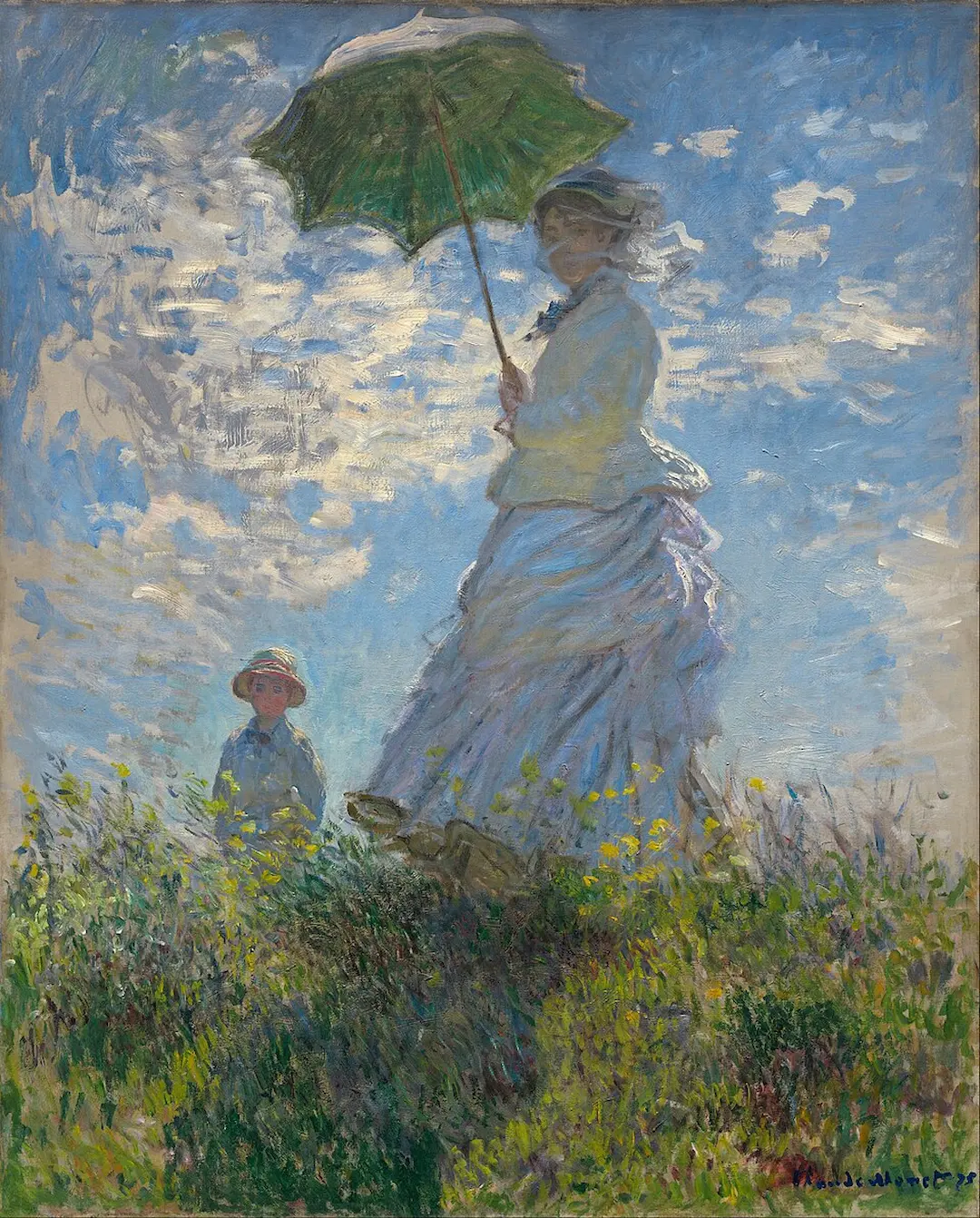
This fine art painting for sale tells more than just a visual story; it captures the leisurely spirit of 19th-century France. Through boats, figures, and shimmering waters, Monet weaves symbols of modernity and relaxation, themes echoed in works like "The Walk Woman With A Parasol" and "Haystacks". "Regatta at Sainte-Adresse" remains a celebrated symbol of Impressionism, inviting viewers to explore the deeper narratives within each stroke.
Owning a hand-painted oil painting like Monet’s "Regatta at Sainte-Adresse" is a dream for many art enthusiasts. Its connection to the Impressionism movement and to masterpieces such as "The Luncheon (Monet’s Garden At Argenteuil)" and "Haystacks" enhances its value. This artwork, alongside related products, represents a timeless investment, offering beauty, history, and a glimpse into the genius of Claude Monet for collectors and admirers alike.
When Art Meets History
"Regatta at Sainte-Adresse" by Claude Monet, a masterwork of the Impressionism movement, captures a lively 19th-century regatta scene with vibrant clarity. This hand-painted oil painting is a testament to Monet’s fascination with modern life and the fleeting effects of light. Like related works such as "Luncheon Of The Boating Party" and "Paris Street; Rainy Day," Monet’s canvas transports viewers to a pivotal era in French culture, blending artistic innovation with historical context.
Techniques That Speak
Monet’s "Regatta at Sainte-Adresse" utilizes the hallmark Impressionist technique of oil on canvas, with loose brushwork and bold color choices that evoke the shimmering movement of water and sky. This approach, shared with paintings like "The Daughters of Catulle Mendès" and "Ambroise Vollard," allows light to dance across the surface, inviting viewers to experience the scene’s vibrancy. Monet’s mastery in using oil on canvas defines his place among the Impressionist greats.
Emotions on Display
In "Regatta at Sainte-Adresse," Claude Monet channels the breezy joy and communal excitement of a seaside festival. The fine art painting for sale pulses with energy, echoing the dynamic spirit of Impressionism found in works like "Dance At The Moulin De La Galette." Viewers are drawn into the festive atmosphere, feeling the sun, wind, and anticipation of the regatta. Monet’s brushwork and color palette evoke a sense of happiness and belonging unique to his era.
Coveted by Collectors
"Regatta at Sainte-Adresse" remains a highly sought-after masterpiece, cherished by art collectors worldwide. Its status as a fine art painting for sale is elevated by Monet’s iconic status within Impressionism and the enduring popularity of related paintings such as "Ambroise Vollard." Collectors prize the painting’s historical significance, technical brilliance, and emotional resonance, making it a centerpiece in any collection of Impressionist works by Claude Monet and his contemporaries.
Related Impressionism Hand-Painted Oil Paintings by Other Artists
Other Famous Impressionism Artists:
Frequently Asked Questions About Regatta at Sainte-Adresse
What is the historical context of "Regatta at Sainte-Adresse"?
"Regatta at Sainte-Adresse" was painted by Claude Monet in 1867, during a period when the Impressionist movement was beginning to take shape. This painting reflects the leisure activities of the bourgeois class in France, showcasing the social changes occurring during the Second Empire under Napoleon III.
What artistic techniques did Monet use in this painting?
Monet employed loose brushwork and a vibrant color palette to capture the effects of light on water and the atmosphere of the scene. His technique emphasizes the fleeting nature of the moment, a hallmark of Impressionism.
What is the significance of the location depicted in the painting?
The painting depicts Sainte-Adresse, a coastal suburb of Le Havre, where Monet spent his childhood summers. This location is significant as it represents both personal memories for the artist and the popular leisure activities of the time.
How does "Regatta at Sainte-Adresse" reflect Impressionist ideals?
The painting exemplifies Impressionist ideals through its focus on contemporary life, the use of natural light, and the depiction of movement. Monet captures a moment in time, inviting viewers to experience the vibrancy of the scene.
What themes are explored in "Regatta at Sainte-Adresse"?
The painting explores themes of leisure, social class, and the relationship between humanity and nature. It highlights the enjoyment of outdoor activities and the beauty of the natural landscape, reflecting the changing social dynamics of the time.
What colors dominate the painting, and what do they symbolize?
The dominant colors in "Regatta at Sainte-Adresse" are blues, greens, and whites, which symbolize tranquility, nature, and the essence of summer. These colors contribute to the overall sense of joy and leisure depicted in the scene.
How does Monet's portrayal of water differ from traditional representations?
Monet's portrayal of water in this painting diverges from traditional representations by emphasizing its reflective qualities and movement rather than focusing on precise details. This approach captures the ephemeral beauty of the moment, a key aspect of Impressionism.
What role does light play in "Regatta at Sainte-Adresse"?
Light plays a crucial role in "Regatta at Sainte-Adresse," as it creates a sense of depth and atmosphere. Monet's depiction of sunlight reflecting on the water enhances the painting's vibrancy and captures the transient effects of light throughout the day.
How has "Regatta at Sainte-Adresse" influenced modern art?
This painting has influenced modern art by paving the way for future artists to explore color, light, and movement in innovative ways. Monet's techniques have inspired countless artists to embrace spontaneity and the beauty of everyday life in their work.
Where can I view "Regatta at Sainte-Adresse" today?
"Regatta at Sainte-Adresse" is part of the collection at the Museum of Fine Arts in Boston. It is displayed alongside other significant works of Impressionism, allowing visitors to appreciate the evolution of this influential art movement.






















_GFM_Painting_(1).webp)


 100% Hand-Painted: Finished in 3-6 Weeks

.png)
















_(1).webp)