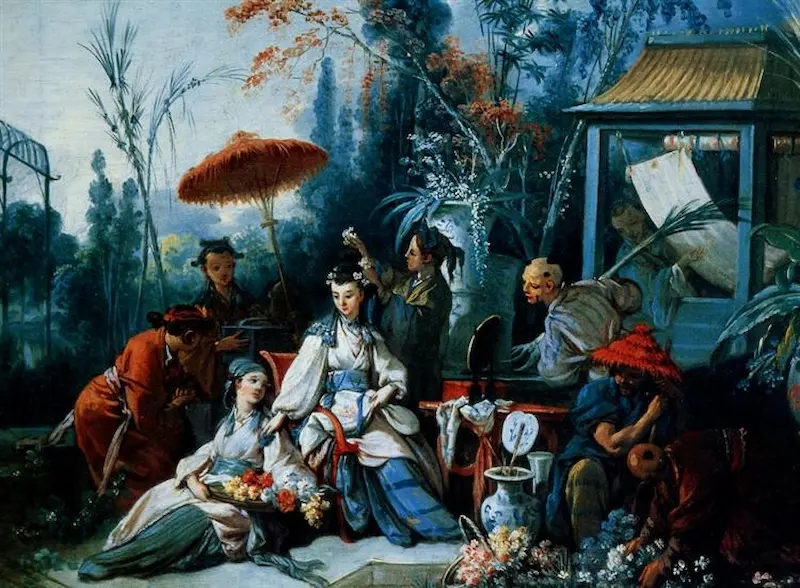
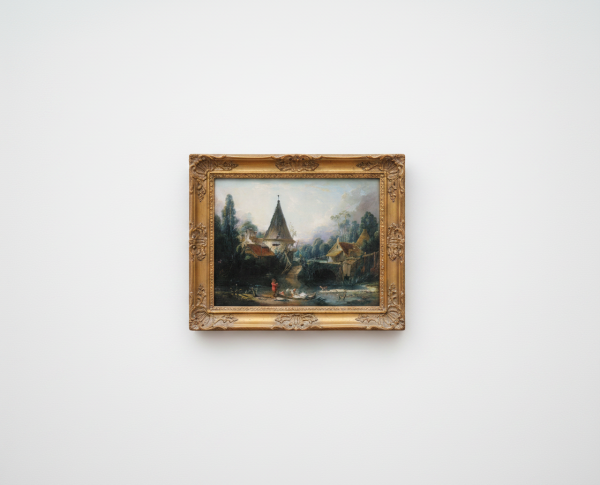
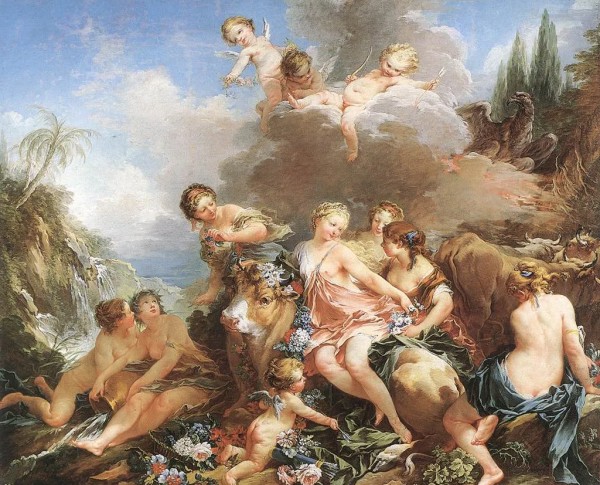
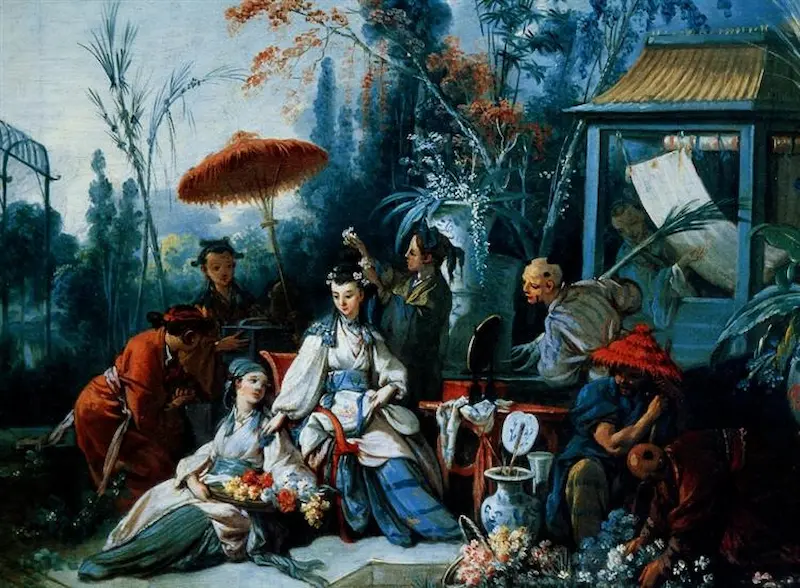
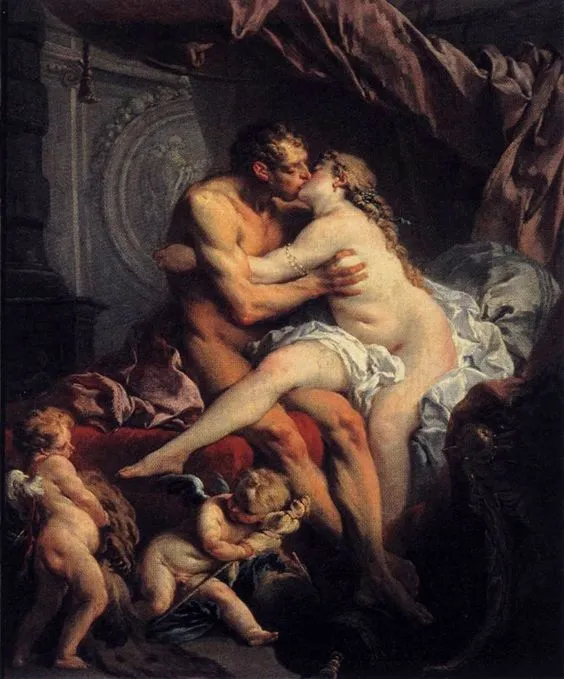
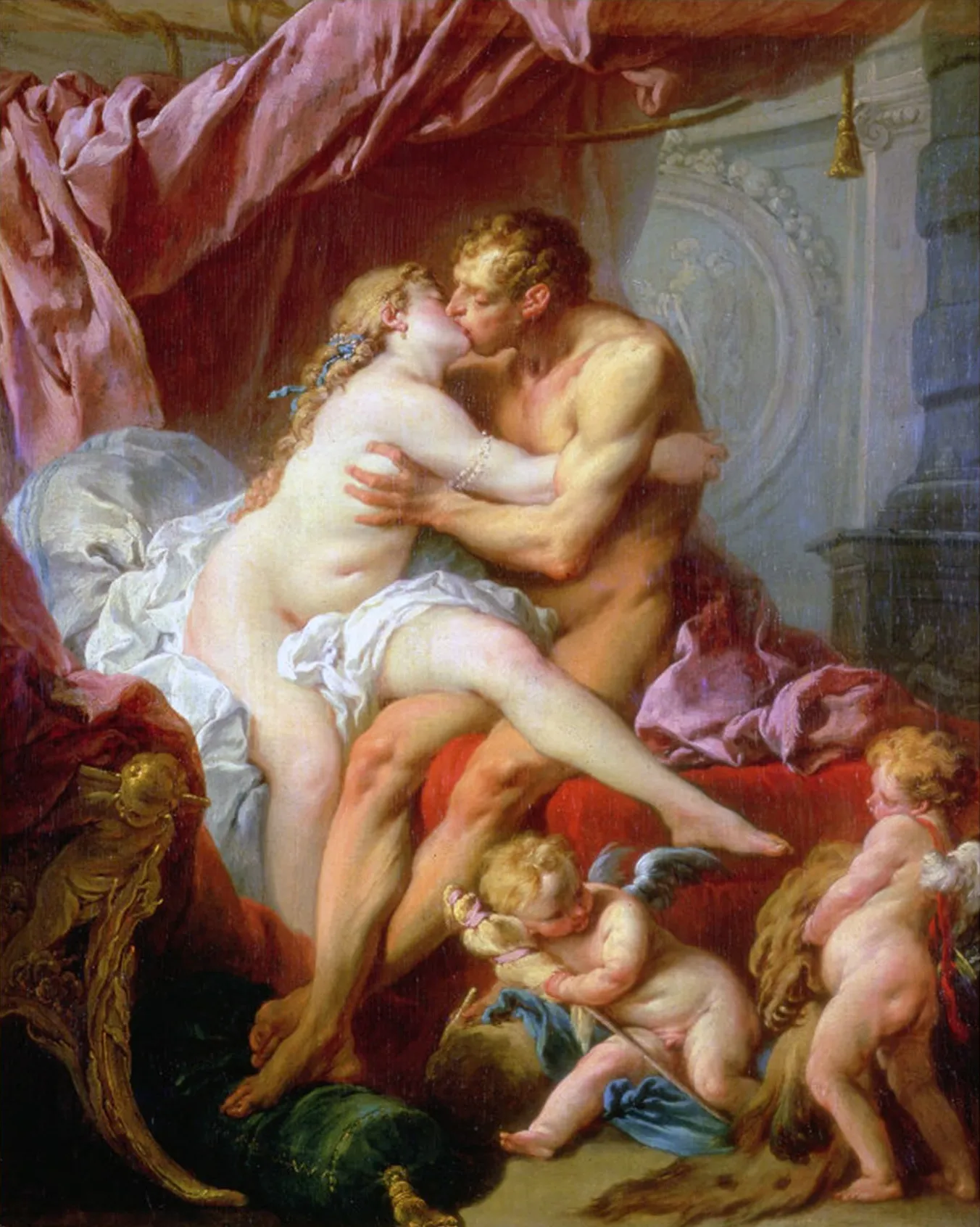
Francois Boucher’s skillful technique in "The Chinese Garden" is evident through his exquisite use of oil on canvas. Each brushstroke brings to life lush landscapes and intricate costumes, embodying the playful spirit characteristic of Rococo art. The composition’s vibrant palette and fluid forms demonstrate Boucher’s mastery, aligning this piece with his other celebrated paintings like "The Painter in his Studio" and "Hercules and Omfala," making it a true masterpiece of its era.
Every element in "The Chinese Garden" by Francois Boucher tells a story, blending Eastern motifs with the lightheartedness of the Rococo movement. This fine art painting for sale is rich in symbolism, from its tranquil garden setting to the elegant figures depicted within. Collectors are often drawn to its narrative depth, pairing it with works such as "Leda and the Swan" or "Diana getting out of her bath" to create a thoughtful and cohesive display.
For art enthusiasts, owning "The Chinese Garden" by Francois Boucher is a chance to possess a piece of Rococo history. This hand-painted oil painting remains highly sought after, admired for both its beauty and craftsmanship. Its value is further enhanced when displayed with related masterpieces like "The Birth and Triumph of Venus" or "Charms of Country Life," making it an exceptional addition to any fine art collection or gallery.
When Art Meets History
Francois Boucher’s "The Chinese Garden" stands as a quintessential masterpiece of the Rococo movement, capturing the fascination with exoticism in 18th-century France. This hand-painted oil painting reflects the era’s interest in chinoiserie, blending European and Asian influences. Boucher, renowned for his idyllic and ornate compositions, transports viewers into a whimsical landscape. Similar works, such as "Venice: A Regatta on the Grand Canal" and "The Piazza San Marco in Venice," further showcase the period’s artistic diversity.
Techniques That Speak
Boucher’s mastery is evident in his use of oil on canvas, a medium favored by Rococo artists for its ability to render delicate textures and vibrant colors. In "The Chinese Garden," fluid brushwork and soft palettes evoke a sense of leisure and fantasy. The artist’s technique parallels works like "The Bucintoro" and "View of the Mills of Dolo on the Brenta," where light and color interplay to create captivating atmospheres characteristic of fine art painting for sale.
Emotions on Display
"The Chinese Garden" radiates joy and serenity, inviting viewers into a dreamlike escape. Boucher’s attention to detail and composition elicit a sense of harmony, reflecting the Rococo movement’s emphasis on pleasure and beauty. The painting’s gentle mood resonates with that found in "Ducal Palace, Venice, c.1755," making it a sought-after hand-painted oil painting for collectors and art lovers who appreciate emotional depth in visual storytelling.
Coveted by Collectors
As a fine art painting for sale, "The Chinese Garden" attracts discerning collectors who value the legacy of Francois Boucher and the Rococo era. Its exquisite oil on canvas technique and enchanting subject matter make it a prized addition to any collection. Alongside related paintings like "Venice: A Regatta on the Grand Canal" and "The Piazza San Marco in Venice," Boucher’s works remain highly sought after for their historical significance and enduring beauty.
Related Rococo Hand-Painted Oil Paintings by Other Artists
Other Famous Rococo Artists:
Frequently Asked Questions About The Chinese Garden
What is the historical context of "The Chinese Garden"?
"The Chinese Garden" was created during the Rococo period in the 18th century, a time characterized by ornate detail and playful themes in art. This painting reflects the Western fascination with Chinese culture, which was prevalent during this era due to trade and exploration.
What artistic techniques did Francois Boucher employ in this painting?
Boucher utilized soft brushwork and a vibrant color palette to create a dreamlike quality in "The Chinese Garden." His use of light and shadow enhances the three-dimensionality of the figures and the lush landscape, typical of his Rococo style.
What are the prominent themes represented in "The Chinese Garden"?
The painting embodies themes of leisure, beauty, and nature, showcasing an idyllic scene that invites viewers to escape into a world of tranquility and harmony, reflecting the Rococo ideal of pleasure and enjoyment.
How does "The Chinese Garden" reflect the influence of Chinese aesthetics?
The painting incorporates elements of Chinese aesthetics, such as the depiction of pagodas, exotic flora, and serene landscapes. This reflects the Western interpretation and romanticization of Chinese culture during the 18th century.
What is the significance of the figures depicted in "The Chinese Garden"?
The figures in the painting, often portrayed in playful poses, symbolize the pursuit of pleasure and the joys of life. They represent the idealized leisure activities of the aristocracy, which were central to the Rococo movement.
In what ways does "The Chinese Garden" exemplify Rococo art?
The painting exemplifies Rococo art through its emphasis on ornate detail, light-hearted themes, and a focus on beauty and sensuality. The playful interaction between figures and nature is a hallmark of this artistic movement.
What role does color play in "The Chinese Garden"?
Color plays a crucial role in "The Chinese Garden," with Boucher employing a rich and harmonious palette to evoke emotions and create a sense of warmth and intimacy within the scene, enhancing the overall aesthetic appeal.
How does the composition of "The Chinese Garden" contribute to its overall impact?
The composition of "The Chinese Garden" is carefully balanced, guiding the viewer's eye through the lush landscape and towards the figures, creating a sense of depth and inviting contemplation of the serene environment.
What cultural exchanges are reflected in "The Chinese Garden"?
The painting reflects the cultural exchanges between the East and West during the 18th century, showcasing how Western artists like Boucher interpreted and integrated Asian motifs into their work, thus enriching the artistic dialogue of the time.
What legacy has "The Chinese Garden" left on subsequent art movements?
"The Chinese Garden" has influenced later art movements by inspiring artists to explore themes of exoticism and cultural fusion. Its celebration of beauty and nature continues to resonate in contemporary art, reflecting the enduring appeal of Rococo aesthetics.























_GFM_Painting_(1).webp)


 100% Hand-Painted: Finished in 3-6 Weeks

.png)
















_(1).webp)