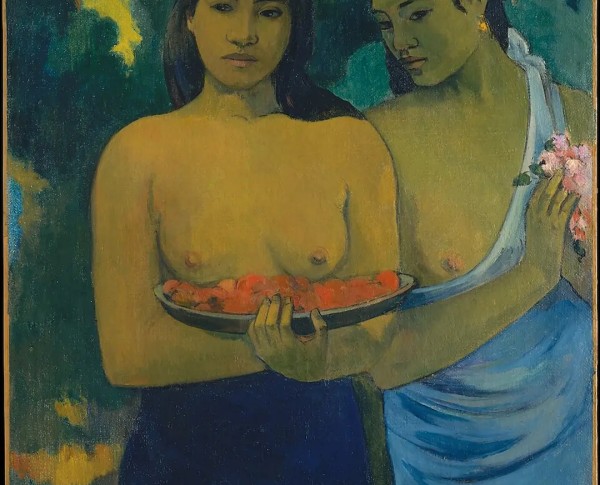
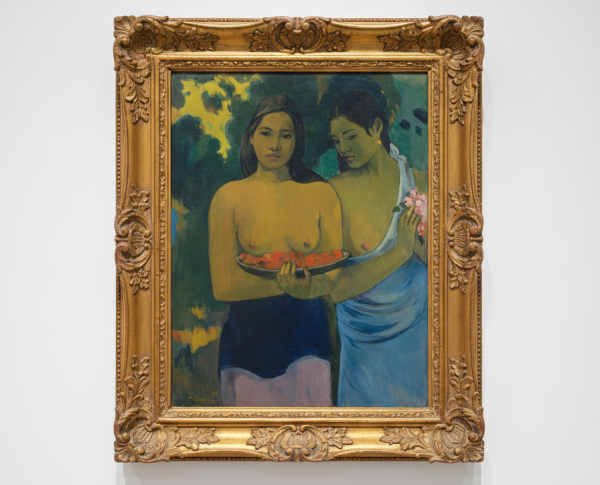
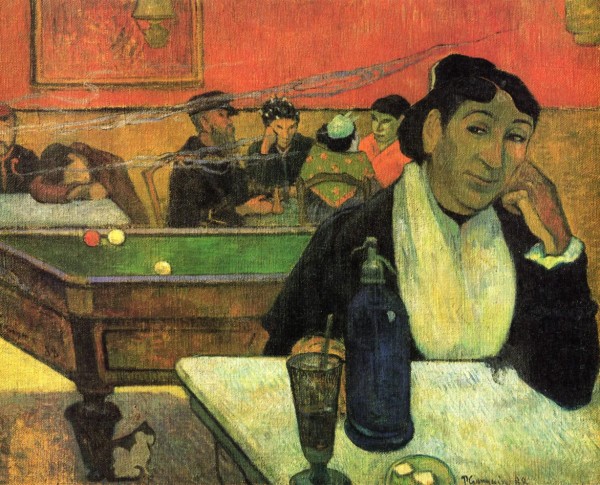
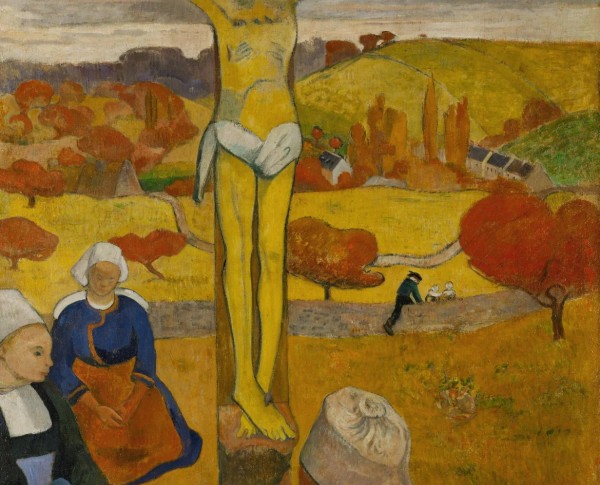
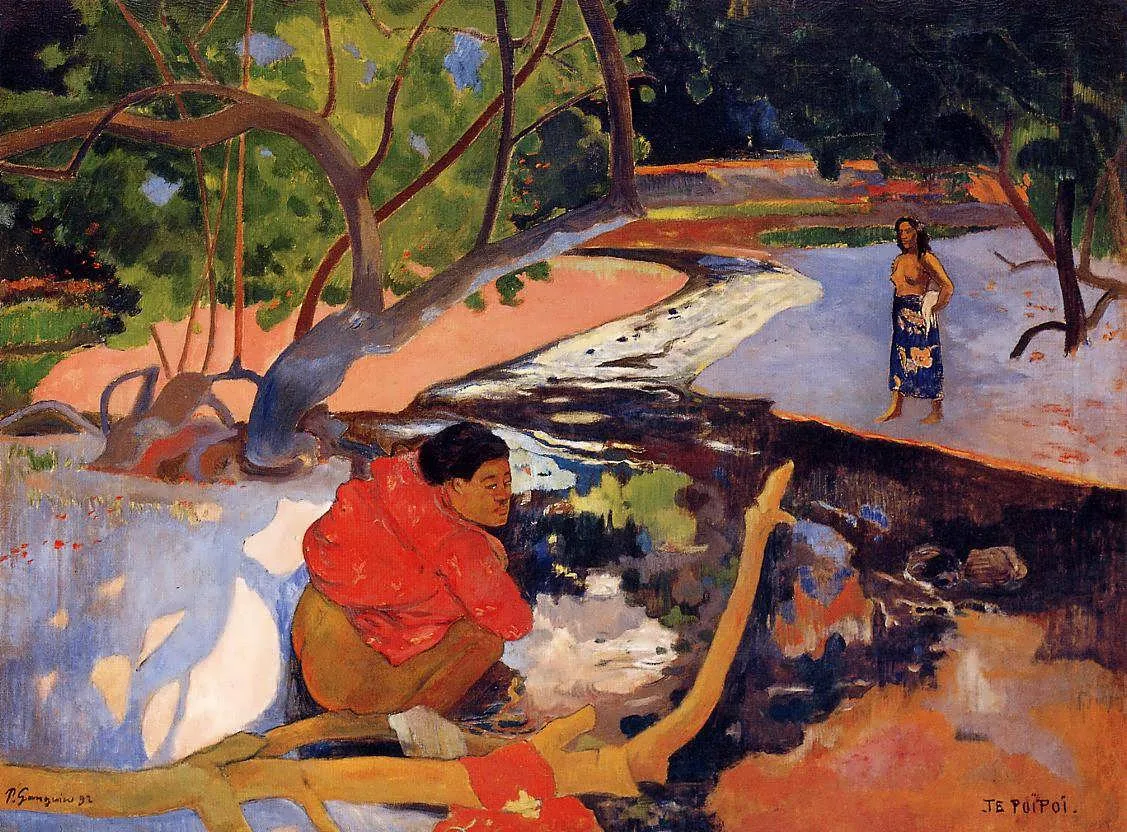
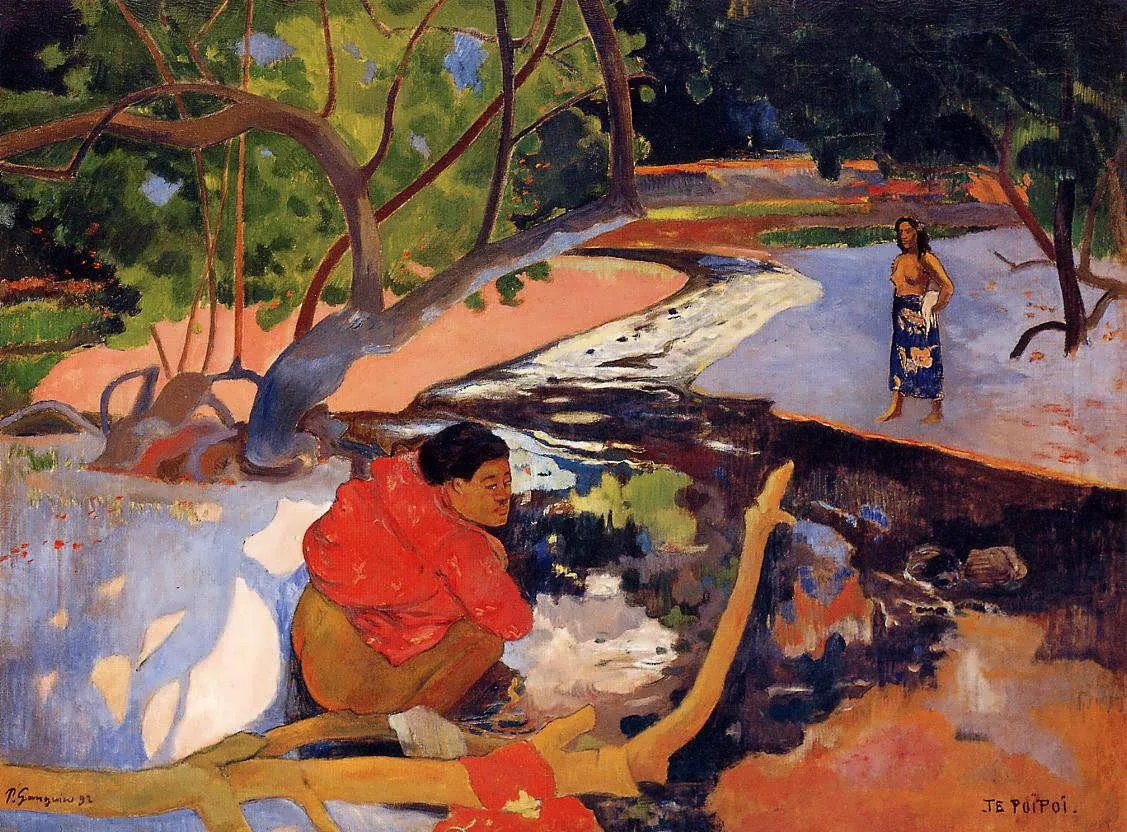
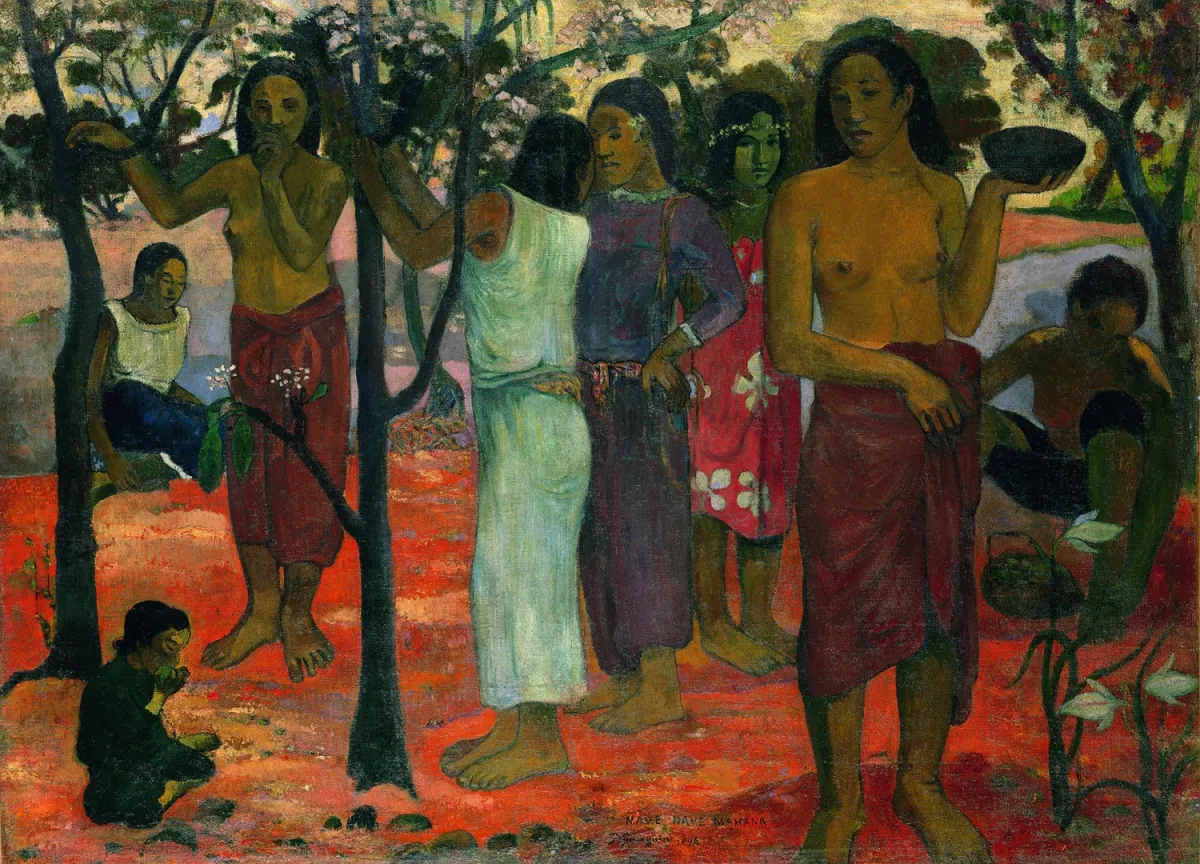
Paul Gauguin’s technique in "Te Poipoi" is a testament to his mastery of oil on canvas. His bold brushstrokes and vibrant color palette exemplify the Post-Impressionism movement’s departure from realism. Each element in this artwork reflects Gauguin’s profound understanding of composition, as seen in related pieces like "Aha Oe Feii?" and "Parahi te marae." For those looking for an exceptional oil on canvas, Gauguin’s works remain a pinnacle of artistic achievement and inspiration.
"Te Poipoi" is more than a fine art painting for sale; it is a narrative woven with cultural symbolism. Paul Gauguin infused the canvas with motifs inspired by Tahitian life, much like in "Where Do We Come From? What Are We? Where Are We Going?". Through expressive figures and symbolic imagery, Gauguin invites viewers to explore deeper meanings and stories. This painting remains a significant piece within the Post-Impressionism movement, celebrated for its storytelling power.
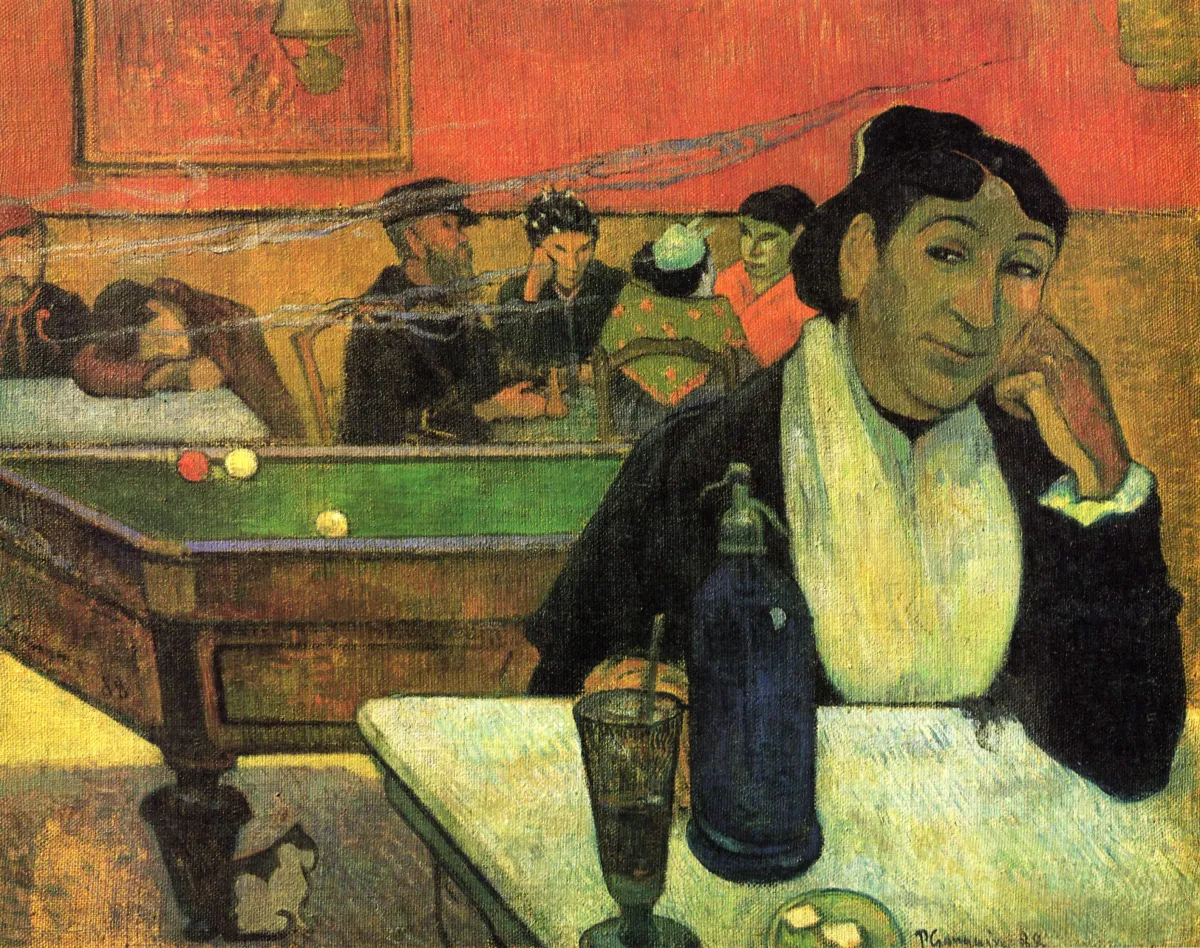
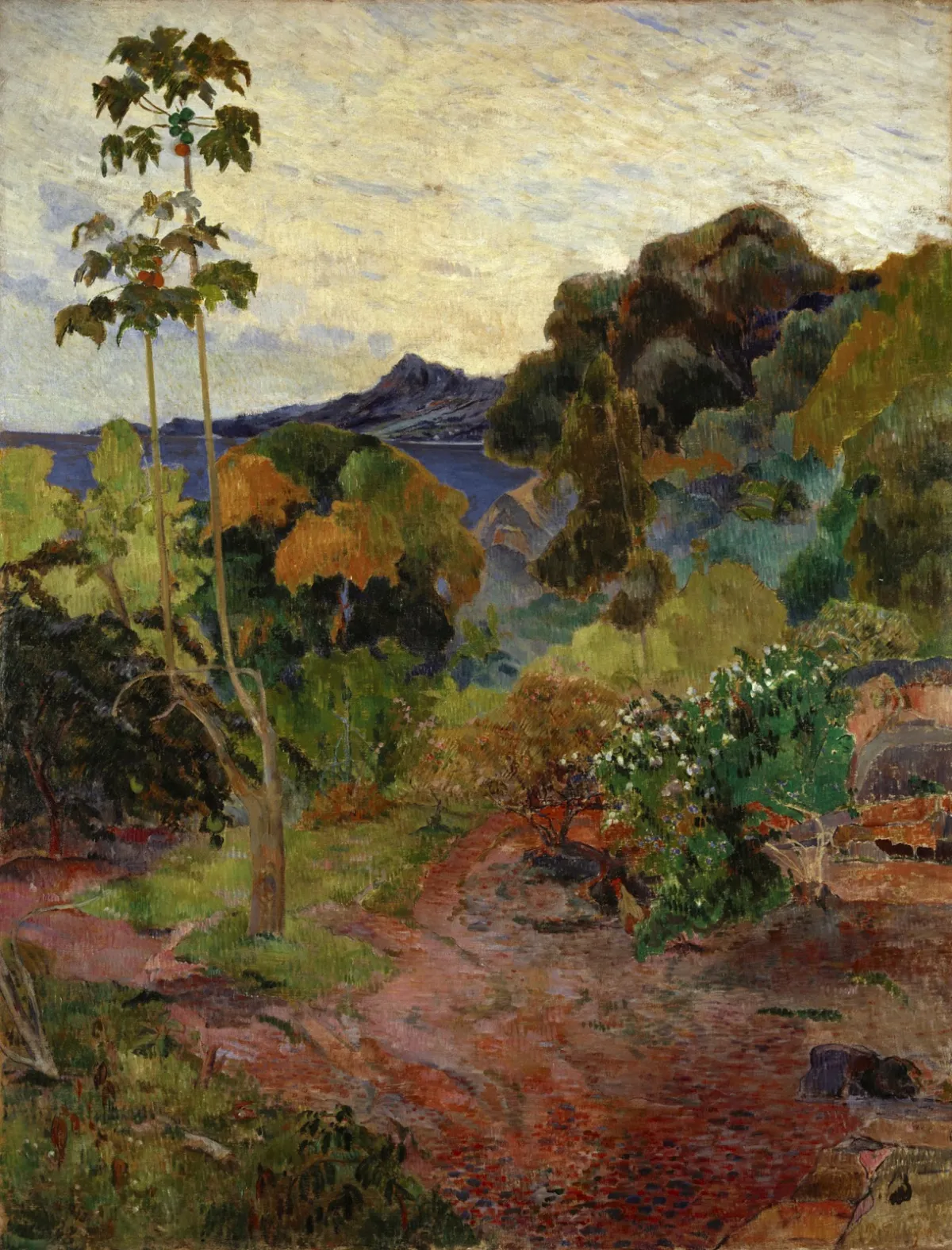
For art collectors, owning "Te Poipoi" is akin to possessing a piece of Post-Impressionist history. Paul Gauguin’s hand-painted oil painting not only enhances any collection but also connects collectors to a broader legacy shared with works like "Manaò tupapaú" and "Martinique Landscape." As a fine art painting for sale, "Te Poipoi" represents both artistic innovation and cultural significance, making it a treasured masterpiece for enthusiasts of Gauguin and the Post-Impressionism movement alike.
When Art Meets History
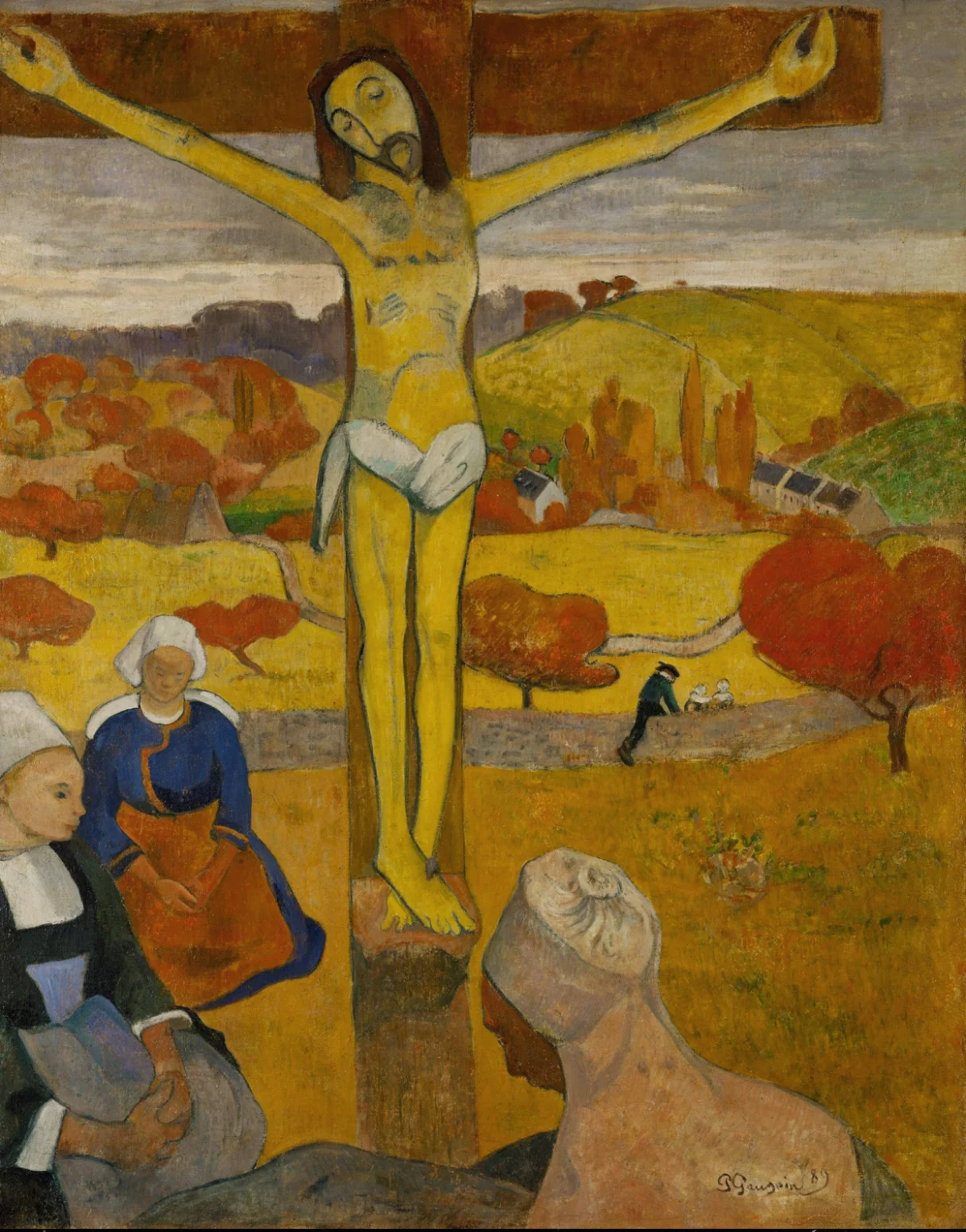
"Te Poipoi" by Paul Gauguin stands as a remarkable example of the Post-Impressionism movement, crafted during a pivotal era in art history. Gauguin, known for his adventurous spirit, created this hand-painted oil painting after his travels to Tahiti, where he sought new inspiration. Like his related works "The White Orchard" and "Dog," "Te Poipoi" reflects a blend of Western techniques and Polynesian themes, making it a significant milestone in the evolution of modern art.
Techniques That Speak
Paul Gauguin's mastery is evident in the use of oil on canvas throughout "Te Poipoi." The painting showcases bold color contrasts, simplified forms, and expressive brushwork characteristic of Post-Impressionism. In comparison to "Wheat Field With Crows" and "Harvest At La Crau With Montmajour In The Background," Gauguin’s technique in "Te Poipoi" pushes boundaries, inviting viewers to experience a unique visual language that communicates beyond words, emphasizing the emotional power of color and composition.
Emotions on Display
"Te Poipoi" radiates a profound sense of tranquility and introspection, hallmarks of Gauguin’s approach to fine art painting for sale. The painting’s serene figures and lush landscapes evoke a dreamlike atmosphere, similar to the mood found in "Vase of Flowers." Through the interplay of light and color, Gauguin invites viewers to immerse themselves in the emotional depths of the scene, making "Te Poipoi" a timeless expression of human experience within the Post-Impressionism movement.
Coveted by Collectors
As a masterpiece by Paul Gauguin, "Te Poipoi" is highly sought after by collectors of Post-Impressionist works. Its unique blend of cultural influences and technical innovation places it alongside related pieces like "The White Orchard" and "Vase of Flowers." The allure of owning such an iconic hand-painted oil painting continues to draw attention in the art world, making "Te Poipoi" a centerpiece in any prestigious collection of fine art.
Related Post-Impressionism Hand-Painted Oil Paintings by Other Artists
Other Famous Post-Impressionism Artists:
Frequently Asked Questions About Te Poipoi
What is the historical context of Te Poipoi?
Te Poipoi was created by Paul Gauguin during his time in Tahiti, a period marked by his search for a more primitive and authentic artistic expression, away from European influences.
What artistic techniques did Gauguin employ in Te Poipoi?
Gauguin utilized bold colors, simplified forms, and a flat perspective in Te Poipoi, which are characteristic of his post-impressionist style, emphasizing emotional resonance over realistic representation.
What themes are explored in Te Poipoi?
The painting explores themes of spirituality, nature, and the idealization of the South Seas, reflecting Gauguin's fascination with the indigenous culture and his desire to escape modern civilization.
What does the title "Te Poipoi" signify?
The title "Te Poipoi" translates to "The Lullaby" in Tahitian, symbolizing the connection between the artwork and the soothing, nurturing aspects of nature and maternal care.
How does Te Poipoi reflect Gauguin's views on civilization?
In Te Poipoi, Gauguin contrasts the perceived innocence and simplicity of Tahitian life with the complexities and moral ambiguities of Western civilization, advocating for a return to a more primal state of existence.
What symbolism can be found in the figures depicted in Te Poipoi?
The figures in Te Poipoi are often interpreted as representations of the idealized Tahitian woman, embodying fertility, beauty, and a deep connection to the land and its traditions.
How does Te Poipoi fit into the broader context of Gauguin's oeuvre?
Te Poipoi is a significant work within Gauguin's body of work, showcasing his unique approach to color and form, as well as his ongoing exploration of themes related to identity, culture, and the human experience.
What influence did Te Poipoi have on modern art?
Te Poipoi has influenced modern art by paving the way for expressionism and fauvism, as artists began to embrace color and form as a means of conveying emotional depth rather than mere representation.
What role does color play in Te Poipoi?
Color in Te Poipoi serves not only to create visual impact but also to evoke emotional responses, with Gauguin using vibrant hues to symbolize the vitality of life and the spiritual essence of the subjects.
How has Te Poipoi been received by critics and art historians?
Critics and art historians have praised Te Poipoi for its innovative use of color and form, recognizing it as a pivotal work that encapsulates Gauguin's artistic philosophy and his quest for a deeper understanding of human existence.






















_GFM_Painting_(1).webp)


 100% Hand-Painted: Finished in 3-6 Weeks

.png)















_(1).webp)