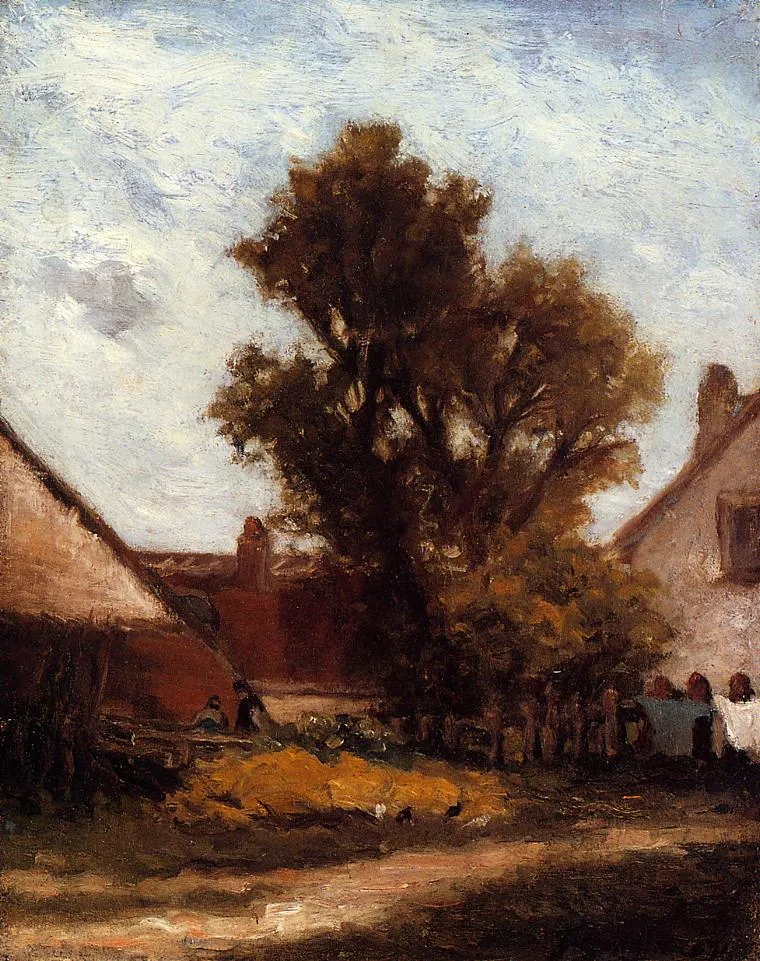
In "Tree in the Farm Yard," Gauguin’s mastery of oil on canvas is evident through his dynamic brushwork and rich color palette. The painting’s textured layers and vibrant hues are hallmarks of the Post-Impressionism movement, showcasing the artist’s innovative spirit. Like his celebrated works "Two Tahitian Women" and "Ia Orana Maria," this piece demonstrates Gauguin’s ability to breathe life into rural scenes, making every detail in his oil on canvas compositions unforgettable.
Every element in "Tree in the Farm Yard" tells a story, with symbols woven throughout Gauguin’s hand-painted oil painting. The solitary tree and rustic farmyard evoke themes of solitude and harmony with nature, inviting viewers to interpret their own narratives. Similar to "Vision After the Sermon" and "Parahi te marae," Gauguin’s Post-Impressionist approach infuses each scene with deeper meaning, making these fine art paintings for sale enduring favorites among collectors and enthusiasts.
Owning "Tree in the Farm Yard" is more than possessing an oil on canvas; it is acquiring a piece of art history from Paul Gauguin, a Post-Impressionist master. Collectors value such works for their emotional depth and striking technique, often pairing them with related pieces like "Chicken Coop" or "Day of the God." This fine art painting for sale not only enhances any collection but also celebrates Gauguin’s lasting influence in the world of art.
When Art Meets History
"Tree in the farm yard" by Paul Gauguin stands as an exemplary hand-painted oil painting within the Post-Impressionism movement. Painted during a period when artists sought to break from tradition, this work reflects Gauguin’s quest for authenticity and simplicity. Like his contemporaries who created masterpieces such as "Bowl With Peonies And Roses" and "Vase of Flowers," Gauguin’s vision was shaped by a historical context that valued expressive color and symbolic content, making this piece a significant chapter in art history.
Techniques That Speak
Paul Gauguin’s "Tree in the farm yard" showcases his mastery of oil on canvas, a hallmark of Post-Impressionist technique. The brushwork is expressive, capturing light and shadow with bold, unblended strokes. This approach, seen in related works like "Christ Church Ferry" and "Cypress against a Starry Sky," emphasizes form over detail and invites viewers to experience the scene’s atmosphere. Gauguin’s innovative use of color and composition revolutionized the way landscapes were depicted in fine art.
Emotions on Display
The emotional depth of "Tree in the farm yard" is palpable, as Paul Gauguin uses vibrant hues and dynamic forms to convey a sense of tranquility and introspection. This fine art painting for sale invites viewers to connect with the rural serenity that inspired Gauguin and other Post-Impressionists. Similar to "Peatery in Drenthe," the painting’s mood is both contemplative and uplifting, revealing the artist’s ability to evoke complex feelings through his distinctive visual language.
Coveted by Collectors
As a celebrated hand-painted oil painting, "Tree in the farm yard" by Paul Gauguin is highly sought after by collectors worldwide. Its place within the Post-Impressionism movement, alongside illustrious works like "Vase of Flowers" and "Cypress against a Starry Sky," enhances its allure. The combination of historical significance and artistic innovation ensures that this painting remains a prized possession for those seeking a remarkable fine art painting for sale to enrich their collections.
Related Post-Impressionism Hand-Painted Oil Paintings by Other Artists
Other Famous Post-Impressionism Artists:
Frequently Asked Questions About Tree in the farm yard
What is the historical context of "Tree in the farm yard"?
"Tree in the farm yard" was painted during Paul Gauguin's time in Brittany, France, where he sought to capture the rural life and its simplicity, contrasting with the industrialization of the era.
What artistic movement is Paul Gauguin associated with?
Paul Gauguin is primarily associated with Post-Impressionism, a movement that sought to express emotional and symbolic content through bold colors and simplified forms.
What techniques did Gauguin use in "Tree in the farm yard"?
Gauguin employed a technique of flat color application, avoiding detailed brushwork to create a sense of harmony and balance in the composition, emphasizing the shapes and colors over realism.
What symbolism can be found in "Tree in the farm yard"?
The tree in the painting symbolizes life, growth, and stability, serving as a focal point that connects the viewer to the rural landscape and the natural world.
How does "Tree in the farm yard" reflect Gauguin's artistic philosophy?
The painting reflects Gauguin's belief in the importance of expressing personal emotion and spirituality through art, moving away from traditional representation to capture the essence of his subjects.
What influences can be seen in the color palette of the painting?
Gauguin's color palette in "Tree in the farm yard" is influenced by his interest in non-Western art, utilizing vibrant, non-naturalistic colors to evoke emotional responses rather than realistic depictions.
In what ways does "Tree in the farm yard" differ from Impressionist works?
Unlike Impressionist works that focus on capturing light and momentary effects, "Tree in the farm yard" emphasizes bold outlines, flat areas of color, and a more symbolic representation of the subject matter.
What role does the rural setting play in the painting?
The rural setting in "Tree in the farm yard" serves as a backdrop that highlights the simplicity and tranquility of country life, contrasting with the complexities of urban existence during Gauguin's time.
How has "Tree in the farm yard" influenced modern art?
The painting has influenced modern art by paving the way for Expressionism and other movements that prioritize emotional expression and abstraction over realistic representation.
What can we learn about Gauguin's view of nature from this painting?
Gauguin's portrayal of nature in "Tree in the farm yard" reveals his deep appreciation for the organic forms and colors of the natural world, reflecting his desire to connect with and celebrate the simplicity of rural life.






















_GFM_Painting_(1).webp)


 100% Hand-Painted: Finished in 3-6 Weeks

.png)















_(1).webp)