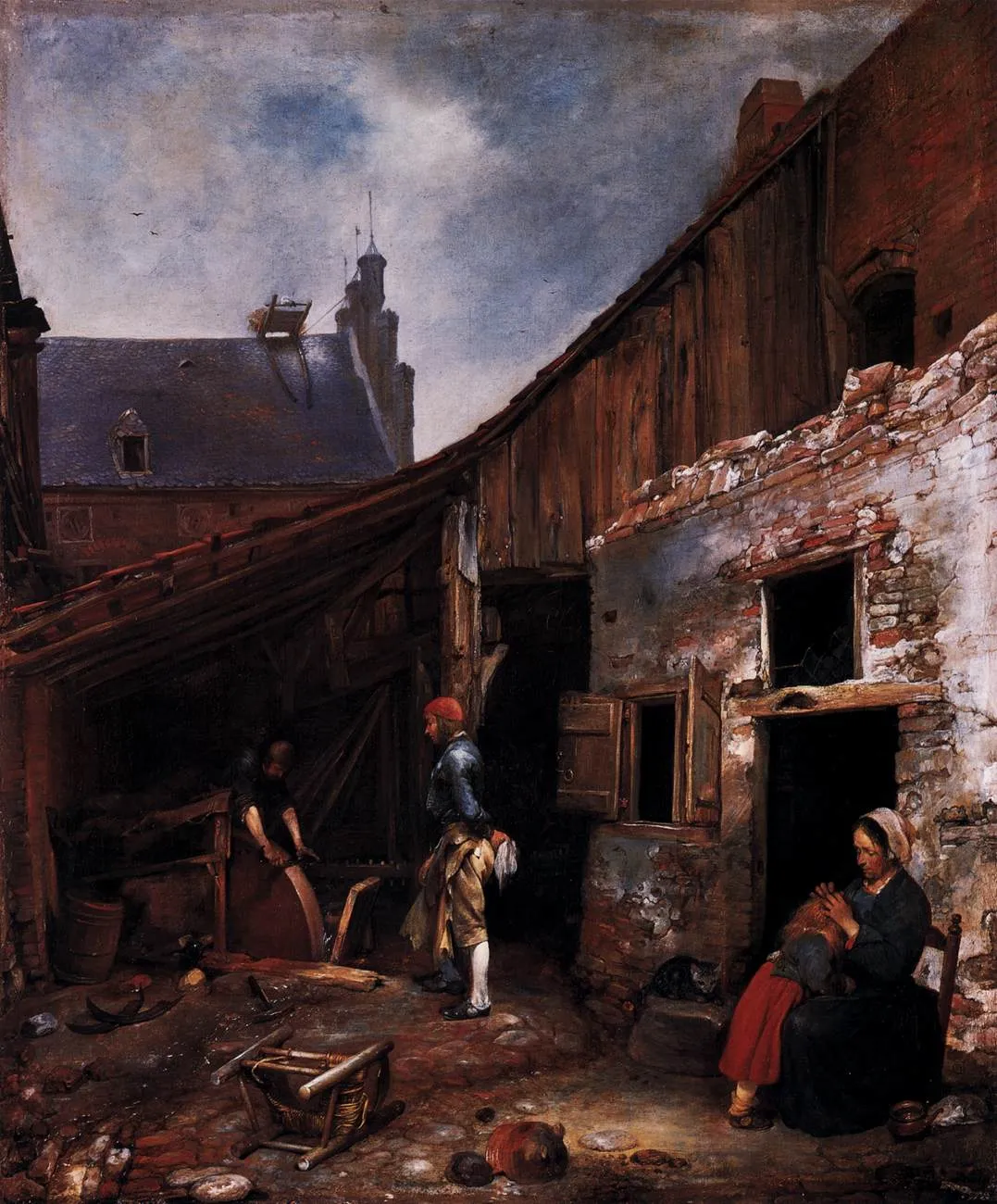
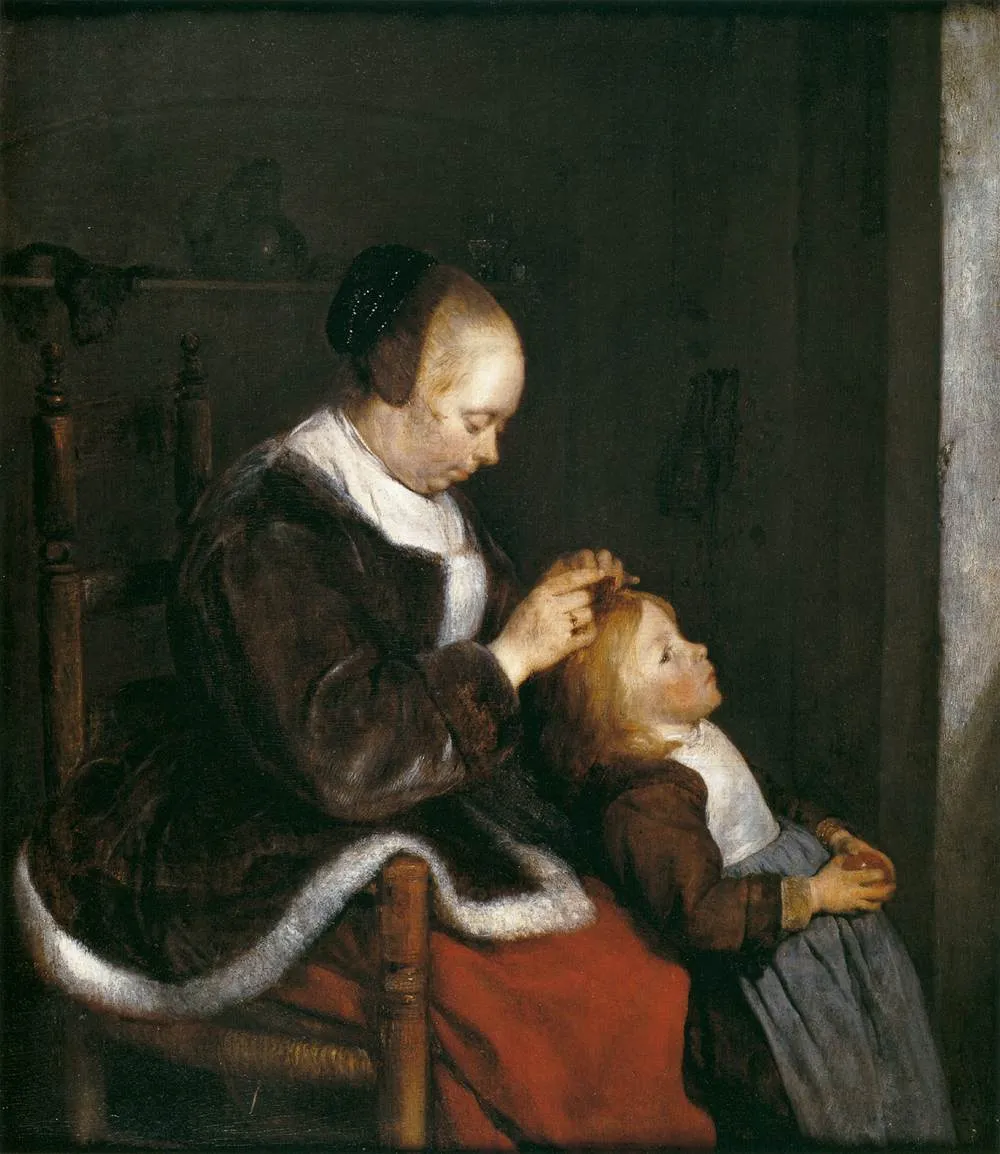
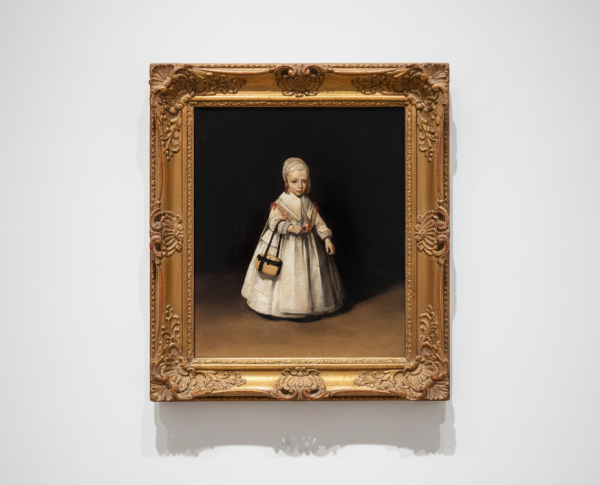
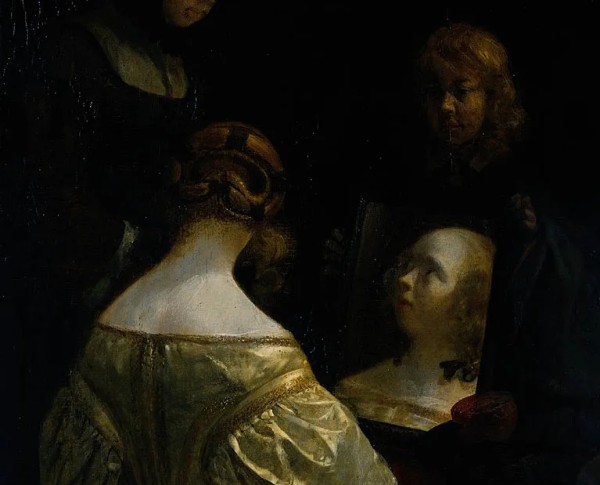
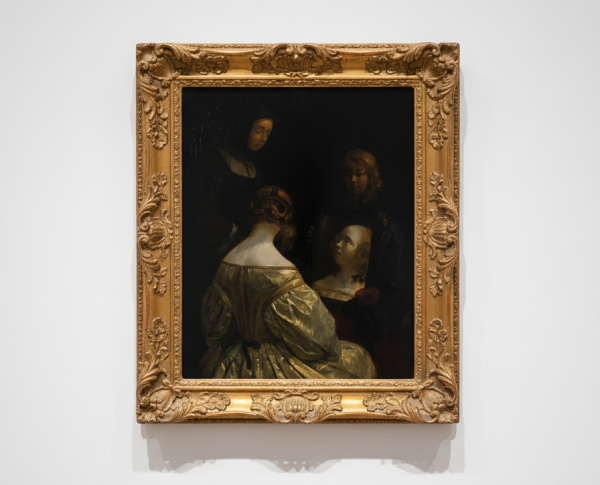
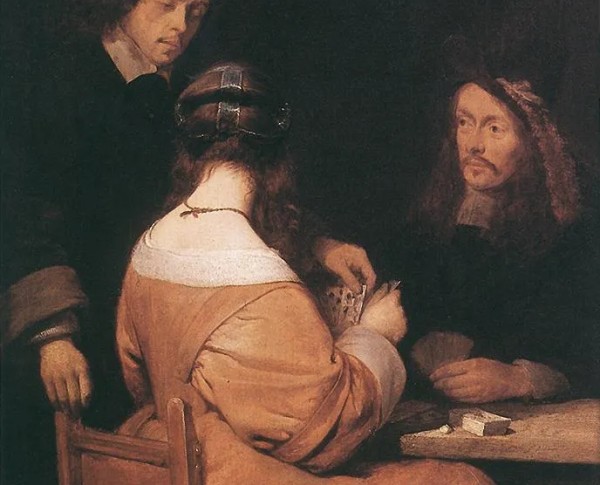
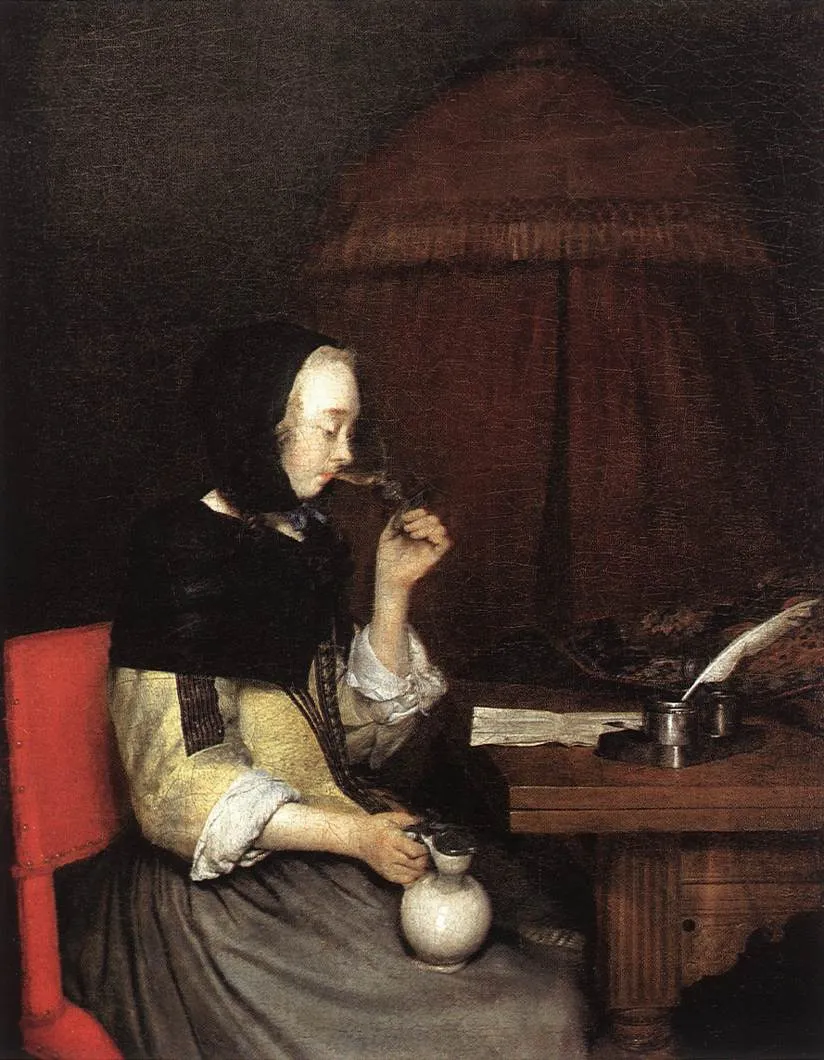
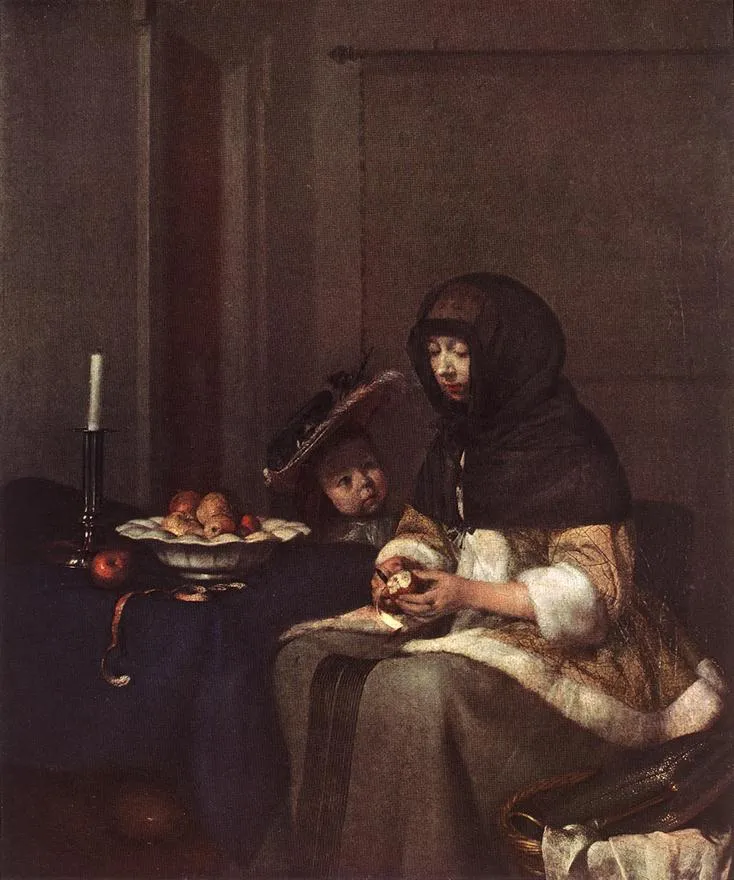
"Woman Drinking Wine" showcases Gerard Terborch’s refined skill with oil on canvas, a medium that brings depth and realism to his subjects. The painting’s intricate details and subtle play of light exemplify the Baroque movement’s dedication to lifelike representation. Terborch’s technique in this oil on canvas piece rivals his other notable works, such as "Mother Combing the Hair of Her Child" and "The Knifegrinder's Family," making each creation a study in artistic mastery.
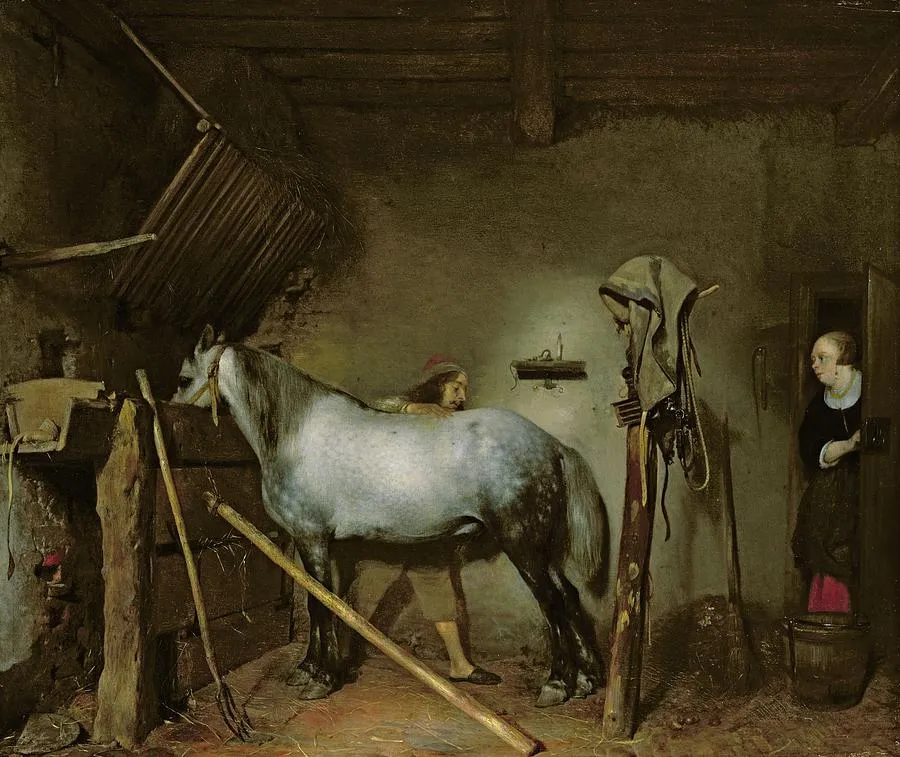
In "Woman Drinking Wine," Gerard Terborch weaves a narrative filled with Baroque symbolism and subtle gestures. The act of drinking wine hints at themes of leisure, social status, and perhaps introspection. Such storytelling elevates this hand-painted oil painting beyond mere portraiture, inviting viewers to ponder the subject’s inner world. Collectors also appreciate similar narrative depth in pieces like "Drink" and "Horse in a Stable," which share Terborch’s nuanced approach.
As a prized example of Baroque artistry, "Woman Drinking Wine" remains a sought-after fine art painting for sale among connoisseurs. Gerard Terborch’s meticulous attention to detail and emotive compositions ensure his works retain enduring value. Those interested in expanding their collection often pursue related paintings such as "Curiosity" and "The Knifegrinder's Family," each embodying the same timeless appeal and technical excellence found in Terborch’s celebrated oil paintings.
When Art Meets History
Gerard Terborch’s “Woman Drinking Wine” stands as a remarkable example of the Baroque movement, capturing a moment of refined domestic life. This hand-painted oil painting reflects the social customs and interiors of the 17th century, providing viewers with a unique window into history. Terborch’s attention to detail is also evident in his related works such as “The Death of St Bonaventura” and “Arcadian Landscape,” which similarly explore historical and narrative themes in fine art.
Techniques That Speak
Gerard Terborch’s mastery is evident in the delicate brushstrokes and luminous textures of “Woman Drinking Wine,” a stunning oil on canvas. The artist’s technical prowess, so prominent in Baroque art, is also displayed in paintings like “Portrait of Fra Zumel Francisco” and “St Pierre Pascal, Bishop of Jaen.” Terborch’s ability to render fabrics, glass, and subtle expressions makes each composition a testament to the enduring allure of oil on canvas as a medium.
Emotions on Display
In “Woman Drinking Wine,” Terborch deftly conveys a quiet moment of contemplation, highlighting the emotional depth characteristic of the Baroque movement. The sitter’s introspective gaze and poised demeanor evoke a sense of intimacy that resonates with viewers. This fine art painting for sale, much like “St Bartholomew almost in agony,” draws us into the psychological world of its subjects, making Terborch’s work timeless and emotionally compelling.
Coveted by Collectors
“Woman Drinking Wine” by Gerard Terborch is highly sought after by art collectors who appreciate the sophistication of Baroque masterpieces. As a hand-painted oil painting, it exemplifies the artist’s renowned style and meticulous execution. Collectors who treasure works such as “The Death of St Bonaventura” and “Arcadian Landscape” recognize the enduring value and historical significance of Terborch’s fine art painting for sale in today’s market.
Related Baroque Hand-Painted Oil Paintings by Other Artists
Other Famous Baroque Artists:
Frequently Asked Questions About Woman Drinking Wine
What is the historical context of "Woman Drinking Wine"?
"Woman Drinking Wine" was created during the Dutch Golden Age in the 17th century, a period marked by significant developments in art, culture, and commerce in the Netherlands. This era saw an increase in the production of genre paintings that depicted everyday life.
Who is the artist behind "Woman Drinking Wine"?
The painting was created by Gerard Terborch, a renowned Dutch painter known for his exquisite depictions of domestic scenes and his ability to capture the subtleties of human emotion and interaction.
What artistic techniques are employed in "Woman Drinking Wine"?
Terborch utilized techniques such as chiaroscuro to create depth and dimension, as well as meticulous attention to detail in the rendering of fabrics and textures, which enhances the realism of the scene.
What is the significance of the wine in the painting?
The wine serves as a symbol of social interaction and leisure, reflecting the customs of the time where drinking was often associated with hospitality and the enjoyment of life. It also hints at themes of indulgence and the complexities of human relationships.
How does "Woman Drinking Wine" reflect the genre painting style?
This painting exemplifies the genre style by focusing on a single, intimate moment in the life of a woman, showcasing everyday activities and emphasizing the emotional and psychological nuances of the subject.
What elements of composition are notable in "Woman Drinking Wine"?
Terborch's composition is characterized by a balanced arrangement of figures and objects, with a strong focal point on the woman. The use of light and shadow guides the viewer's eye and enhances the overall harmony of the piece.
What does the attire of the woman in the painting signify?
The woman's attire, which features luxurious fabrics and intricate details, signifies her social status and wealth, reflecting the affluence of the Dutch society during the 17th century and the importance of fashion in social identity.
How does Terborch portray emotion in "Woman Drinking Wine"?
Terborch captures subtle emotions through the woman's expression and body language, suggesting introspection or contemplation. This ability to convey complex feelings is a hallmark of his artistic style.
What role does light play in "Woman Drinking Wine"?
Light plays a crucial role in the painting, highlighting the woman's face and the glass of wine, which draws attention to the central themes of the work. The interplay of light and shadow also enhances the three-dimensionality of the figures.
In what ways does "Woman Drinking Wine" reflect societal norms of the 17th century?
The painting reflects societal norms by portraying a woman in a domestic setting, engaging in a social activity that was common among the upper classes. It illustrates the cultural emphasis on hospitality and the role of women in social gatherings during this period.






















_GFM_Painting_(1).webp)


 100% Hand-Painted: Finished in 3-6 Weeks

.png)















_(1).webp)