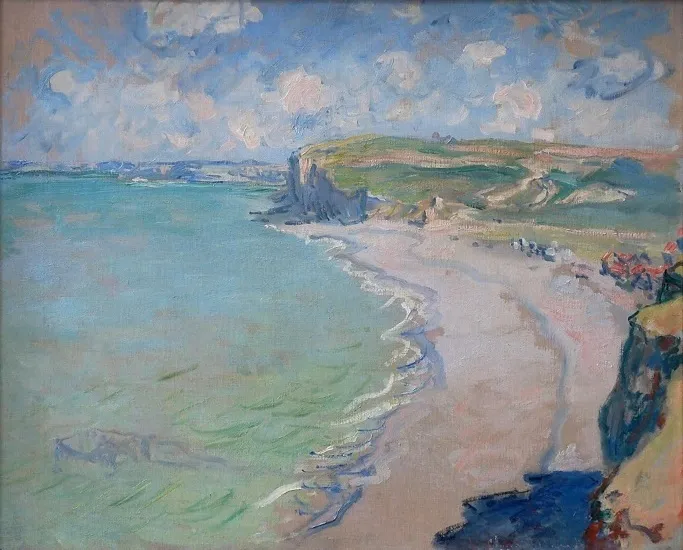
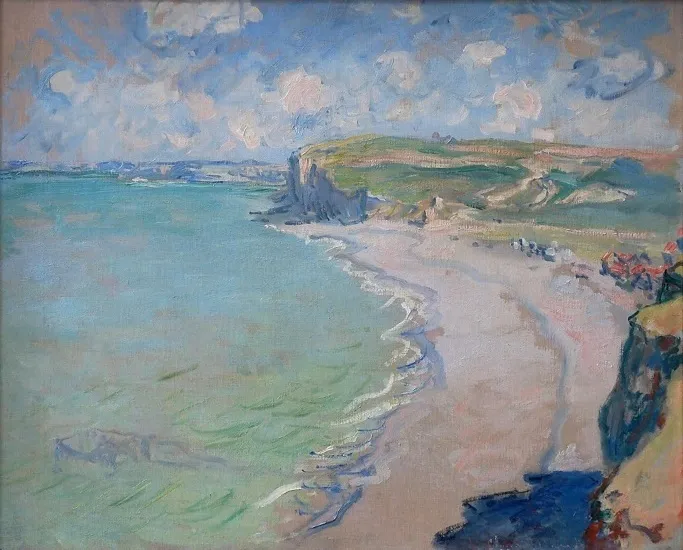
Claude Monet’s "Beach in Pourville" showcases his remarkable technique with oil on canvas. Through vibrant, quick brushwork and a delicate palette, Monet captures the dynamic interplay of sea, sky, and sand. The Impressionism movement is celebrated for such daring use of color and light. If you appreciate Monet’s mastery, explore related products like "The Cliff Walk at Pourville" and "Le Givre," each offering a glimpse into the artist’s evolving style and vision.
"Beach in Pourville" tells a story beyond its scenic beauty—Monet’s brushwork invites viewers to experience the tranquility and movement of the shoreline. This fine art painting for sale reflects the Impressionist desire to capture emotion and atmosphere, rather than mere detail. Its evocative landscape aligns with other Monet works like "Wild Poppies, Near Argenteuil" and "Le Pont D'argenteuil," each painting revealing deeper narratives and the subtle symbolism of nature.
Owning "Beach in Pourville" means possessing a remarkable piece of Impressionist history. Claude Monet’s oil on canvas paintings are highly sought after, and this work is no exception. Collectors value its provenance and artistic significance, especially when paired with related products such as "Regatta at Sainte-Adresse" and "Le Givre." Investing in this fine art painting for sale ensures a timeless connection to the genius of Monet and the enduring allure of Impressionism.
When Art Meets History
"Beach in Pourville" by Claude Monet stands as a landmark hand-painted oil painting from the Impressionism movement, capturing a fleeting moment on the French coast. Painted in 1882, the artwork reflects Monet's passion for natural light and atmospheric effects. Alongside masterpieces like "Umbrellas" and "A Girl with a Watering Can," this piece showcases the pivotal historical period when artists broke from tradition, making history with every brushstroke in the world of fine art painting for sale.
Techniques That Speak
Monet’s "Beach in Pourville" employs masterful oil on canvas techniques, featuring rapid, visible brushwork and vibrant color palettes. These hallmarks of Impressionism invite viewers to experience the movement’s innovative approach firsthand. Like "Les orangers" and "Chapel on the Láchar estate," Monet’s choice of oil on canvas allowed him to layer colors and capture shifting light, creating a dynamic, almost dreamlike seaside scene that continues to inspire artists and collectors worldwide.
Emotions on Display
This hand-painted oil painting radiates the tranquility and joy of a breezy day by the sea, a signature of Monet’s Impressionist vision. The soft hues and lively brushstrokes evoke a deep sense of peace and nostalgia, similar to the moods found in "And They Still Say Fish is Expensive!" and "A Girl with a Watering Can." Monet’s "Beach in Pourville" brings viewers into a world where emotions are as vivid as the landscape, making it a truly moving fine art painting for sale.
Coveted by Collectors
"Beach in Pourville" remains highly sought after by art enthusiasts and collectors, celebrated as a prime example of Impressionism’s enduring allure. As with Monet’s other masterpieces like "Umbrellas" and "Les orangers," this oil on canvas painting is prized for its historical significance and artistic innovation. Its status as a fine art painting for sale cements its place among the most coveted works, appealing to those who appreciate the genius of Claude Monet and the legacy of Impressionism.
Related Impressionism Hand-Painted Oil Paintings by Other Artists
Other Famous Impressionism Artists:
Frequently Asked Questions About Beach in Pourville
What is the historical significance of "Beach in Pourville"?
"Beach in Pourville," painted in 1882, is significant as it reflects Claude Monet's exploration of light and color, characteristic of the Impressionist movement. This work captures the essence of a seaside landscape, showcasing Monet's innovative techniques during a pivotal period in art history.
What artistic techniques did Monet employ in "Beach in Pourville"?
Monet utilized loose brushwork and a vibrant palette to convey the fleeting effects of light on the water and sand. His technique of applying paint in quick, short strokes allows for a dynamic representation of the scene, emphasizing the movement of the waves and the atmosphere of the beach.
How does "Beach in Pourville" exemplify the Impressionist style?
The painting exemplifies Impressionism through its emphasis on capturing a moment in time, use of natural light, and focus on everyday scenes. Monet's choice of subject—a tranquil beach—along with his innovative approach to color and form, aligns with the core principles of the movement.
What themes are present in "Beach in Pourville"?
The painting explores themes of nature, leisure, and the passage of time. It evokes a sense of tranquility and the beauty of the natural world, inviting viewers to appreciate the serene experience of being by the sea.
What inspired Monet to paint "Beach in Pourville"?
Monet was inspired by the coastal landscapes of Normandy, where he often painted en plein air. The unique light and atmospheric conditions of the region motivated him to capture the beauty of the beach and its surroundings, reflecting his love for nature.
What is the significance of the color palette used in "Beach in Pourville"?
The color palette of "Beach in Pourville" features soft blues, greens, and sandy tones, which create a harmonious and inviting atmosphere. This choice of colors enhances the sense of light and airiness, characteristic of Monet's work and the Impressionist style.
How does "Beach in Pourville" reflect Monet's artistic evolution?
This painting marks a period of growth in Monet's artistic journey, as he began to focus more on the effects of light and atmosphere. It showcases his departure from traditional techniques, embracing a more spontaneous and expressive approach that would define his later works.
What role does composition play in "Beach in Pourville"?
The composition of "Beach in Pourville" is carefully balanced, with the horizon line positioned low to emphasize the expansive sky and the dynamic movement of the waves. This arrangement draws the viewer's eye across the canvas, creating a sense of depth and immersion in the scene.
What impact did "Beach in Pourville" have on future artists?
"Beach in Pourville" influenced future generations of artists by demonstrating the power of color and light in landscape painting. Monet's innovative techniques paved the way for modern art movements, encouraging artists to explore abstraction and personal expression in their work.
Where can I view "Beach in Pourville" today?
"Beach in Pourville" is part of the collection at the Musée d'Orsay in Paris, France. The museum is renowned for its extensive collection of Impressionist and Post-Impressionist masterpieces, providing a fitting context for Monet's work.






















_GFM_Painting_(1).webp)


 100% Hand-Painted: Finished in 3-6 Weeks

.png)















_(1).webp)